

All About Pad Printing Ink
Boston Industrial Solutions, Inc. offers a full line of eco-friendly, fast-curing, industrial-grade inks.
Pad Printing Ink
Boston Industrial Solutions, Inc., has the best pad printing ink lines for printing any application. Our silicone, UV ink, and solvent-based pad printing inks are safe, fade-resistant, and abrasion resistant. Furthermore, we rigorously test these inks to exceed demanding industry standards for performance, adhesion, and compliance. These pad printing inks are excellent for printing different types of applications, including promotional, apparel, consumer electronics, drinkware, sporting goods, silicone rubber, cosmetic packaging, toys, and more.
The Natron® pad printing inks portfolio has medical-grade, high-abrasion, chemical-resistance, dishwasher-safe, and high-density inks. Additionally, we offer in-house custom color matching and ink mixing services. Other ink services that we offer include ink adhesion testing, pad printing training, and custom ink formulation. All these services are available for inkjet, pad printing, and screen-printing inks.
What is Pad Printing Ink?
Pad printing ink is a special type of “paint” formulated for application using a pad printing machine to a substrate as a thin ink film (print) that dries quickly. Ink manufacturers combine solvents and solid matter to create the ink. The solid matter includes binders, resins, additives, catalysts, photo initiators, and pigments. The specific formulation of pad printing ink will vary depending on the application, substrate, compliance, and environmental considerations.
The pad printing process is an indirect printing process where a silicone pad transfers a thin film of ink as a 2D image from an engraved plate (cliché) onto a 3D object.
The formula for making pad printing ink is: (solids + solvent = pad printing ink). Where solid matter = binders + resins + other additives. The type and ratio of these components will vary depending on the type of ink.
Pad Printing Ink Types
There are several types of ink for pad printing. These are solvent-based ink, UV-curable ink, silicone ink, and water-based ink. Many industries widely use solvent-based inks, which are the most common.
Furthermore, there are two types of pad printing inks: one-component inks and two-component inks.
- 1- component inks require only a solvent. During printing, the printer adds the solvent as a percentage of the ink weight.
- 2- component inks require an ink hardener (crosslinker) and a solvent to reduce their viscosity. Depending on the ink series, the ratio is 10:1 (10 parts of the ink to 1 part of the hardener). In other words, the harder is generally 10% of the ink’s weight.?
Pad printing inks are further classified based on the substrates they adhere to (e.g. metals, plastics, glass, silicone, cotton, etc.)
Boston Industrial Solutions, Inc., manufactures and provides pad printing ink for almost all possible substrates and applications. Examples of pad printing applications include medical devices, cosmetic packaging, automotive parts, promotional items, toys, sporting goods, appliances, consumer electronics, and more. We will cover solvent-based inks and silicone inks in detail below.
Solvent-Based Pad Printing Ink
Solvent-based pad printing ink is the most common type of ink used in the pad printing process. These inks use solvent as the base and carrier of the ink. The solvent allows the ink to easily print, spread, and transfer during the pad printing process. Because these inks use solvents, they have a volatile organic compound (VOC) component that varies from one ink to another. After printing, the solvent evaporates, leaving the pigment, resin, and binders, also known as the solids, on the substrate.
What is Silicone Ink?
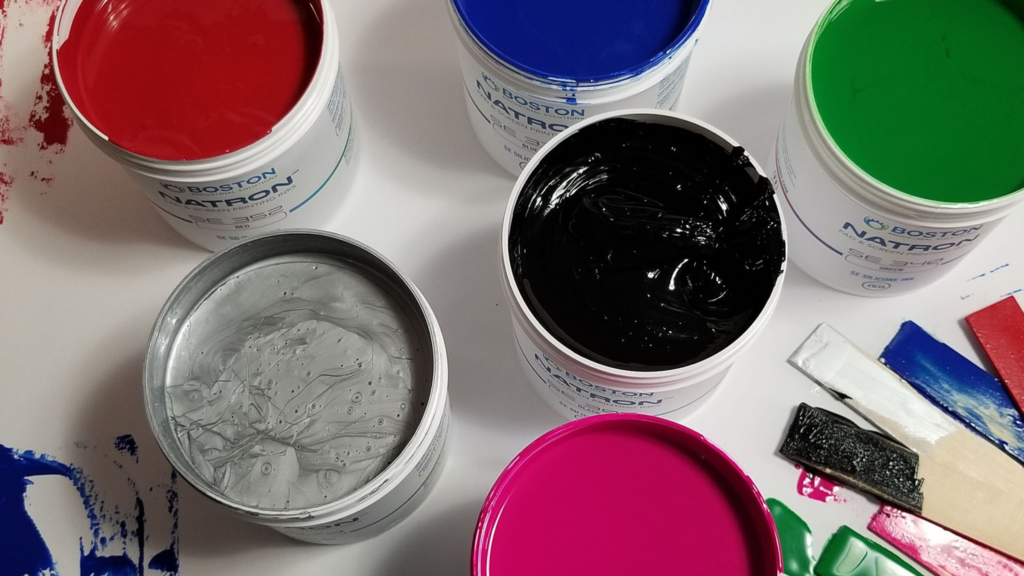
Silicone ink is a specialized, two-part printing system made from liquid silicone polymers and a curing catalyst that transforms into a flexible, rubber-like layer.
Characteristics for Ink for Pad Printing
Pad printing ink must be tacky enough to lift off an etched plate and stick to a silicone pad, yet fluid enough to transfer cleanly onto the product.
The viscosity must be precisely controlled using thinners so the ink flows into the plate etch and releases from the pad without stringing.
The ink layer must develop a sticky outer skin during transfer so it prefers sticking to the target object over staying on the silicone pad.
Pigment density must hide the substrate color effectively, especially on dark plastics or metals.
Available in glossy, satin, or matte final appearances depending on visual requirements.

The Chemical Components of Pad Printing Ink
The chemical components of pad printing ink vary depending on the specific ink formulation and the ink’s intended use. The most important components used to make pad printing ink include binders, resins, solvents (thinners), and pigments (colorants).
Solvent Base
Generally, the solvent (thinner) is typically 10–65% of the ink composition. The solvent in pad printing ink serves several purposes. Pigment (color dispersion) is one of the critical roles of solvent during ink formulation. Solvents evenly suspend the pigments within the ink.
Maintaining the ink viscosity (thickness of the ink) is another important function of the solvent base.
Binders and Resins
Both binders and resins play a critical role in pad printing ink formulation. These two components are different, although many ink suppliers use these terms interchangeably. Let’s explore the differences between resins and binders.
Binders constitute 15 to 50% of the composition of the ink. Binders wet the pigment, which facilitates the dispersion of its particles. As a result, binders hold the pigments together, hence creating a consistent and uniform layer of ink on the printed surface. Examples of polymers include acrylics, vinyl, polyurethane, etc. These materials form the adhesion and flexibility properties of the ink. Binders contribute to the ink’s resistance to weather elements, abrasion resistant, moisture, and chemicals.
Pigments (Colorant Substances)
Pigments (colorant substances) constitute 5–30% of ink. We triple-mill the pigments to achieve very fine particles. Next, we disperse these finely milled solid substances in the binder.
Color and opacity are the primary functions of pigments in pad printing ink formulation. Color is the desired hue (shade), whether it’s a standard color, metallic shade, process color, neon (fluorescent) color, or a custom color. Opacity refers to the ink’s transparent characteristics. High-opaque ink ensures that the printed image completely covers and conceals (hides) the underlying substrate, maintaining the ink’s color integrity.
- Maintaining color fastness—the ability to resist fading or changing color when exposed to UV light. At Boston Industrial Solutions, Inc., we use only fade-resistant pigments to formulate the Natron® pad printing ink line.
- Color consistency is critical when printing on long-term or repeat jobs. During ink formulation, we use special tools to make sure that each color shade is the same from one batch to the next. This assures our customers that they can create custom colors that match our standard colors every time. In addition, our customer is confident that during a large-scale production run, the colors they use will be the same from one batch to the next.
- Versatility allows for diverse design possibilities and customization to meet specific customer print requirements. Look at our color cards to see the available high-opacity, intermixable standard colors. All our color shades within each series are intermixable to create new shades.
Ink Data Sheets
There are several important documents to review to ensure that the pad printing process is carried out safely and in compliance with relevant standards. These datasheets include safety data sheets, technical data sheets, standard operating procedures, etc. We will review the importance of technical data sheets (TDS).
As discussed, pad printing uses one- or two-component solvent-based ink, UV ink, or silicone-based ink. Different inks use different additives and adhere to different substrates. For this reason, it is important to consult the technical data sheet for each ink to determine what ink is suitable for your printing application. A technical data sheet is a specification sheet for a product. It summarizes the technical characteristics of the product and gives the user a full understanding of what and how to use a specific product. Therefore, it is important to review the TDS for each ink before using it.
Considerations when Choosing an Ink
There are various factors to consider when choosing the best pad printing ink for your application. Here are the most important factors to consider when choosing ink for your printing application:
Substrate
This is the material you will print on. What is the composition of the material?
Adhesion & Abrasion Resistance
do you need the ink to be resistant to abrasion, rub, tape, chemicals, and weather elements?
Ink Coverage Power
Some inks are transparent. You may need to double print to achieve good opacity.
Finish (Gloss or Matte)
It is important to determine the type of finish that you need. Do you want a matte finish or a glossy finish?
Light Resistance
Light resistance (light fastness) is a property of an ink pigment’s resistance to fading when exposed to light.
Drying Speed
The drying speed of the ink is also critical. However, you can easily control this with solvents. Some inks will dry faster than others.
Specialized applications
Specific applications, such as medical devices and silicone, require specialized pad printing inks.
Ink Additives
Pad printing additives are substances added to the inks to enhance various characteristics of the ink properties, such as adhesion, drying time, viscosity, and flexibility. Some common types of additives include thinners (solvents), retarders, thickeners, hardeners, adhesion promoters, anti-static paste, matting agents, anti-skinning agents, and flow agents.
Let us review two of the most common types of pad print ink additives: hardener and thinner.
Printing Ink Solvents
Printing ink solvents modify the ink’s viscosity, adhesion, and drying speed. There are different types of solvents, each with a unique evaporation speed. Furthermore, different solvents work with specific inks. E.g., TRM thinner for silicone works best with the SE Series silicone ink. On the other hand, TMG solvent works with MG, MGX, BX, and several other ink series. Please note that the choice of solvent should satisfy the printing project requirements. Additionally, the solvent should work with the ink series that best suits your substrate.
Printing Ink Solvents
Pad printing hardener, known as catalyst or ink crosslinker, enhances the ink’s durability and mechanical strength and crosslinks the ink with the substrate. Once cured, the hardener undergoes a chemical reaction (crosslinking), which forms a three-dimensional structure. These structures increase the ink’s hardness and resistance to chemicals, wear, abrasion, flexibility, and scratching. Hardeners are specially formulated to work with a specific ink series, like solvents. Different inks and applications require different ink-to-hardener ratios. One-component inks do not require hardeners. Therefore, when using an ink, e.g., ST Series, you do not need to add a hardener at all. On the other hand, 2-component inks require a hardener. The ratios range from 5 to 35% of the ink weight.
How long does it take to dry?
Different pad printing inks dry at different speeds. For solvent-based inks, the printed ink film takes about 24 hours to dry and about 76 hours to achieve full cure. On the other hand, UV inks dry instantly on exposure to UV light at 395nm. UV inks take about 24 hours to achieve full cure. While silicone inks will eventually air dry, heat is required to speed up drying time.
The amount of hardener (catalyst) used affects the rate at which the printed image dries. Moreover, the use of faster-evaporating solvents will increase the rate at which the ink film dries.
Consider using heat tunnels to speed up the drying process of the ink. Except for silicone, after heating the substrate, other inks still require a 24-hour period to achieve full cure. Silicone inks cure immediately after the heated silicone product cools down.
Lastly, on average, it takes about 25 seconds for most solvent-based pad printing inks to achieve “dry-to-touch” status.
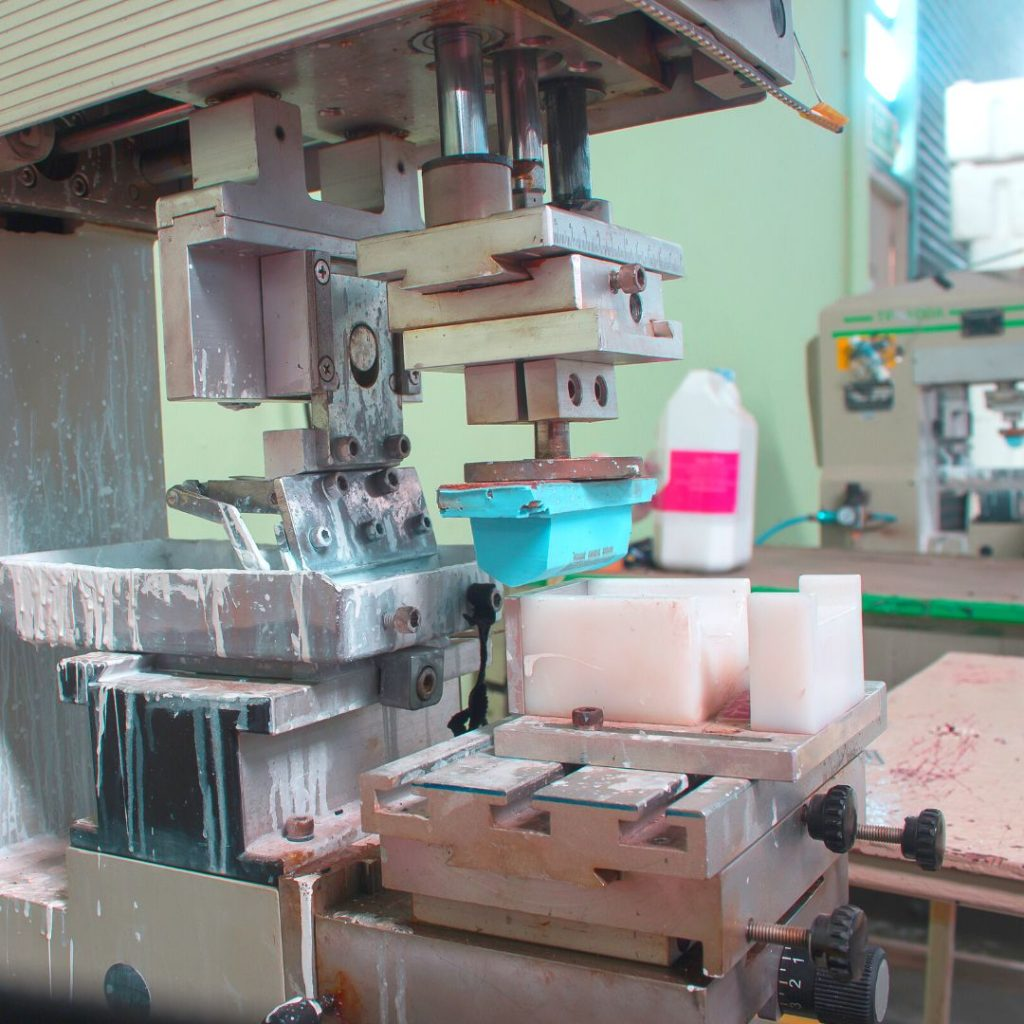
Types of Applications
At Boston Industrial Solutions, Inc., we offer inks to many industries and for printing on many types of materials and applications. Some of the industries that use our inks include:
Inks for making medical devices.
Food packaging
Our inks are food-contact-safe and are compliant with Title 21 CFR regulations.
Toys
The Natron® series inks are compliant and do not contain 19 forbidden elements.
Automotive Parts
Automotive industries rely on our inks for printing automotive parts.
Consumer Electronics
Consumer products and electronic devices
Aerospace & Exploration
Aerospace and space exploration applications, etc.
Every ink that Boston Industrial Solutions, Inc. manufactures and supplies conforms to the most stringent worldwide standards, such as EuPIA, GADSL, RoHS, EN 71/3, REACH, USP Class VI, cGMP, GAMP5, and FDA.
Is it Possible to Print All
Materials with Pad Printing Inks?
The scientific and manufacturing industries are always coming up with new materials. For this reason, it might not be possible to have ink to print on all substrates. However, for the most challenging applications, with the combination of adhesion promoters, it is possible to print on almost all materials. Boston Industrial Solutions, Inc. offers different types of inks for printing on almost any kind of material that you can think of, such as:
- Silicone rubber
- ABS
- ASA
- PVC
- Coated surfaces
- Rhodium-coated
- Aluminum
- Ceramics
- Cotton
- PC (Polycarbonate)
- Synthetic leather
- Thermoplastics
- Glass
- Gold-plated
- Nickel-plated
- POM
- SAN
- Polyurethane (PU)
- Leather
- Paper
- PMMA
- Polyester (PES)
- Duroplastics
- Polyamide (PA)
- Wood
- Polystyrene (PS)
- TPU, TPE, TPS
- EVA
- Silicone fabrics
- Rigid PVC
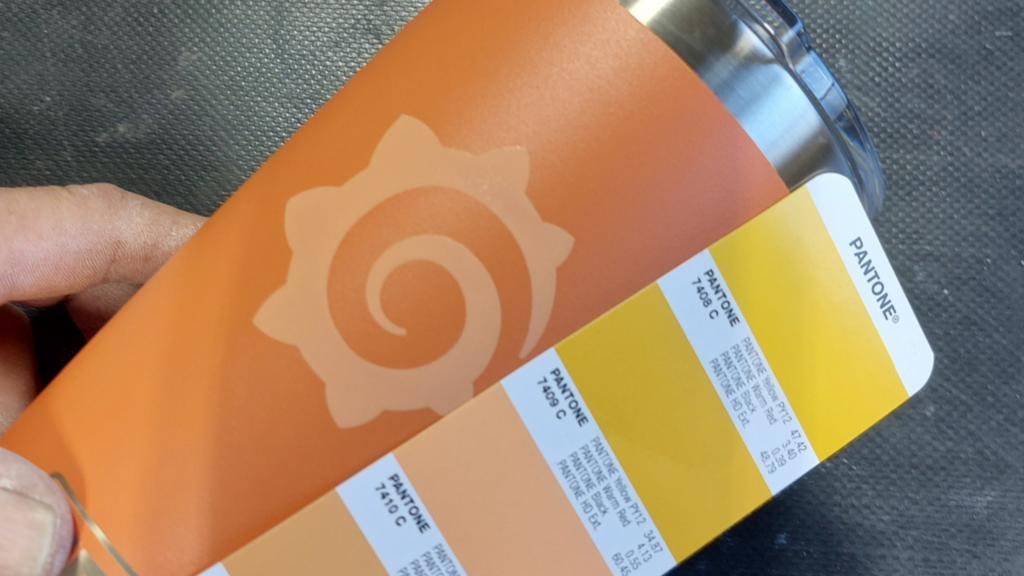
Ink Color Matching Services
Ink mixing is an interchangeable term for ink color matching. Over the years, Boston Industrial Solutions, Inc., has developed a large library of colors. We store these colors in our color-matching system. These colors are available for all our pad printing ink ranges.
If a color is not available, following the RAL, PMS, or HEX system, we can formulate any color that you can dream of. We use advanced tools such as spectrophotometers to accurately calculate and match the ratios needed for a perfect color match. We match inks to perfectly print nearly any shade on any printable substrate background, dark or light.
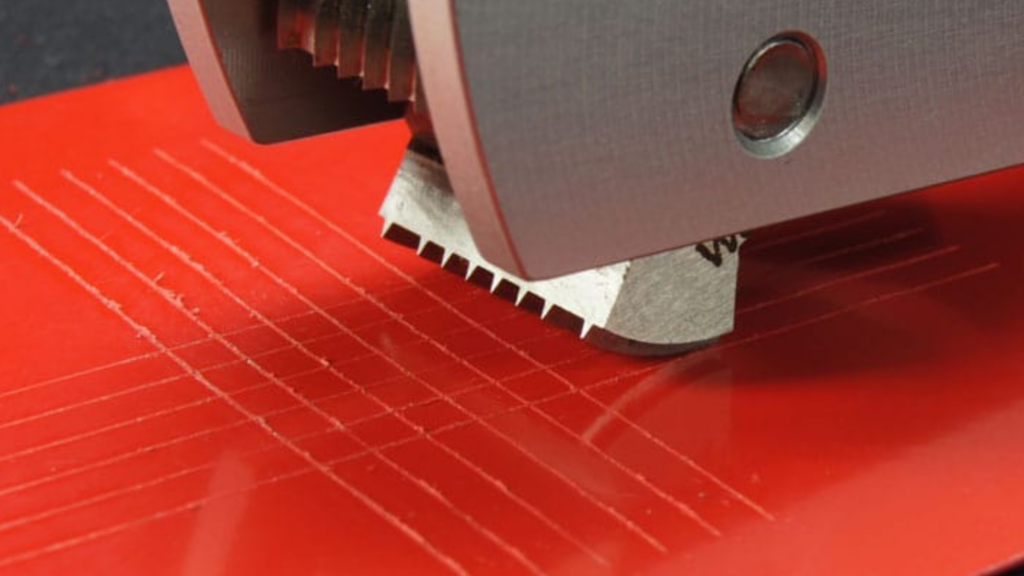
Ink Adhesion Testing
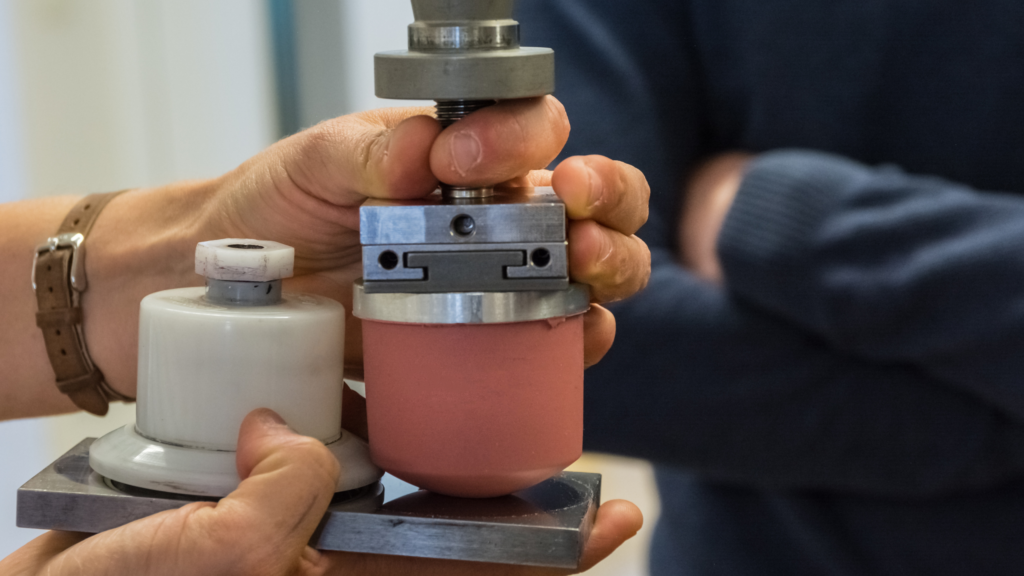
Adhesion testing is an important part of the development and quality control of pad printing. Adhesion testing ensures that printed images meet customer-required standards for durability and longevity. Additionally, it helps identify potential problems in pre-production.
At Boston Industrial Solutions, Inc., we offer ink adhesion testing following the ASTM industry standards.
Compliance and Certifications
There are very many industries that use pad printing inks for marking, printing, and decorating products. Many people use these products daily. As a result, it is very important that inks comply with various standards.
The reasons for compliance include product safety, consumer protection, environmental impact, worker health and safety, legal requirements, global markets, quality, supply chain management, and ethical considerations.
CPSIA
EuPIA
GADSL
RoHS
EN 71/3
REACH
USP Class VI
cGMP
GAMP5
FDA
USP Class VI
Safe Inks. Strong Standards.
All our printing inks do not contain heavy metals (lead, cadmium, mercury) or phthalates. In addition, some of our inks, such as the SE-F, MG, and BX series, are Class IV certified. This means that these inks meet strict medical safety standards.
For Apparel & Skin Contact
For pad printing on textiles, important certification includes Eco Passport by Oeko-Tex®. This compliance testing checks for chemicals, colorants, and auxiliaries used to manufacture textiles. It checks inks for human skin contact. The ST Series ink for tagless printing on apparel ensures no exposure to toxic chemicals when prints come into contact with human skin. Since these tags are touching skin for prolonged periods of time daily, it is essential that there be no exposure to toxic chemicals.
Other Certifications
Specifications are requirements by the end user that pad printing inks have specific characteristics and meet certain standards. For example:
Military spec to MIL-I-43553 and AA56032.
When properly applied and cured, the ink has excellent adhesion to metal, glass, and hard plastics.
The ink is resistant to:
- acids
- alkalies
- solvents
- salt spray
- thermal shock
Ink Series & Composition
- The Natron MG Series ink for glass, metals, ceramics, and hard plastics meets military specifications for MIL-I-43553 and AA56032.
- This printing ink is a permanent, two-component, epoxy-based printing ink.
- Use the i-240x hardener, which cures at elevated and/or room temperatures.
Trouble Shooting: Pad Printing Ink Related Problems
Like any other printing method, there are certain pad printing ink-related problems that may affect the quality of the prints. It is therefore important to identify and address these issues to achieve consistent printing results. Here are some common ink problems during pad printing:
Poor ink adhesion, ink bleeding (leaking from the cup), ink smearing, ink drying too quickly, ink contamination, ink not transferring properly, ghosting, and ink curing issues. Visit our support hub for more information.
Concerns and Future
Developments
As we conclude, let’s review concerns and new developments in pad printing ink.
Current Concerns
These are the current challenges faced by the pad printing ink industry:
- Environment Impact
- Regulatory Compliance
- Substrate Compatibility
- Durability And Resistance Properties Of The Material
Future Developments
These are the current challenges faced by the pad printing ink industry:
- Environment Impact
- Regulatory Compliance
- Substrate Compatibility
- Durability And Resistance Properties Of The Material
Our Pad Printing Ink Line
For more information on our pad printing inks, check out the Pad Printing Ink Overview on our blog.