


When manufacturers need to print detailed graphics, logos, text, or markings onto products with curved, uneven, or irregular surfaces, traditional printing methods may not be the best fit. That’s where pad printing comes in.
Pad printing is a versatile indirect printing process that can transfer a high-quality image onto a wide variety of three-dimensional products and components. From medical devices and automotive parts to consumer products and electronics, pad printing is widely used when precision, consistency, and the ability to print on challenging surfaces are essential.
What Is Pad Printing?
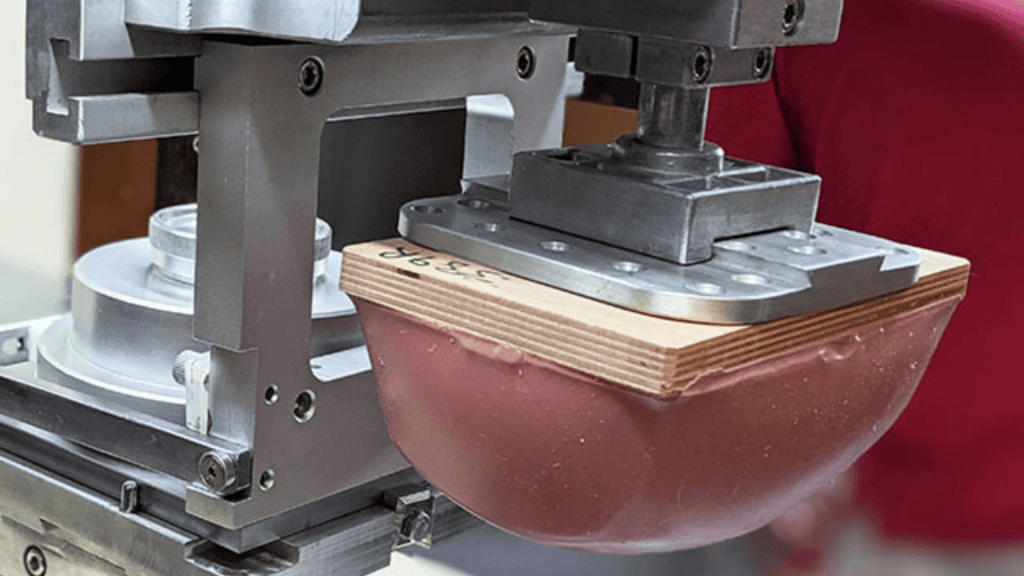
Pad printing is a printing process that uses a flexible silicone pad to transfer ink from an etched image plate, known as a cliché, onto a product.
Unlike flat-screen printing or other direct printing methods, pad printing is designed to work on surfaces that may be curved, recessed, textured, or otherwise difficult to print. The silicone pad conforms to the shape of the part, allowing it to pick up an image from the cliché and accurately deposit it onto the product.
This flexibility makes pad printing an excellent choice for printing on components with complex geometries or surfaces that cannot easily be placed against a traditional printing screen or roller.
How Does Pad Printing Work?
Although pad printing is a highly specialized process, the basic concept is relatively straightforward. The process generally follows these steps:
1. The Image Is Created on a Cliché
The first step is preparing the artwork and transferring the desired image onto a cliché. The image is etched or engraved into the surface of the plate, creating a recessed area that will hold the printing ink.
The depth and quality of the etched image can affect the amount of ink transferred and, ultimately, the quality of the finished print.
2. Ink Fills the Etched Image
Ink is applied across the surface of the cliché. A doctor blade or similar system then removes excess ink from the surface, leaving ink only inside the recessed image area.
At this point, the cliché is ready for the silicone pad to pick up the image.
3. The Silicone Pad Picks Up the Image
A flexible silicone pad is pressed down onto the ink-filled image on the cliché. The pad’s surface picks up the ink from the etched area.
Silicone is an important part of the process because it is flexible enough to deform around the product’s surface while still maintaining the integrity of the printed image.
4. The Pad Transfers the Image to the Part
The silicone pad moves from the cliché to the product. It then presses against the part, releasing the ink and transferring the image onto its surface.
The pad’s flexibility allows it to conform to curved and irregular surfaces without significantly distorting the image.
5. The Ink Cures
After the image has been transferred, the ink must cure or dry to achieve the required durability and adhesion. Depending on the application and ink system, curing may occur through air drying, heat, or other methods.
The result is a precise, durable printed image that can be applied to a wide range of products and components.
Why Is Silicone Used in Pad Printing?
The silicone pad printing pad is one of the most important components of the pad printing process.
Silicone has several properties that make it ideal for pad printing. It is flexible, resilient, and non-absorbent, allowing it to pick up ink from the cliché and release it onto the target surface.
The pad printing pad can also be manufactured in different shapes, sizes, and hardness levels. This allows manufacturers to select a pad that is suited to the geometry of the part and the specific requirements of the application.
For example, a properly selected pad can help minimize image distortion when printing onto curved surfaces, recessed areas, or other challenging geometries.
What Materials Can Be Pad Printed?
One of the major advantages of pad printing is its versatility. Depending on the ink system and surface preparation, pad printing can be used on many different substrates and materials, including:
- Plastics
- Metals
- Glass
- Ceramics
- Rubber
- Silicone
- Painted or coated surfaces
- Other engineered materials
The right ink formulation is critical to achieving proper adhesion, durability, chemical resistance, and appearance. Factors such as the substrate, surface energy, environmental conditions, and end-use requirements should all be considered when selecting an ink system.
What Types of Products Use Pad Printing?
Pad printing is used across a wide range of industries because it can produce detailed markings on parts with complex shapes.
Common applications include:
- Medical devices and components
- Automotive parts
- Electronic components
- Consumer products
- Promotional products
- Industrial controls
- Appliances
- Toys and sporting goods
- Packaging components
- Electrical and mechanical components
Pad printing can be used for everything from small identification marks and product codes to detailed logos, symbols, and multi-color graphics.
What Are the Advantages of Pad Printing?
Pad printing offers several advantages compared with other printing technologies.
Printing on Complex Shapes
The flexibility of the silicone pad printing pad makes it possible to print on curved, concave, convex, and irregular surfaces that can be difficult to print using conventional methods.
High Level of Detail
Pad printing is capable of reproducing fine lines, small text, symbols, and intricate graphics when the appropriate equipment, cliché, pad, and ink system are used.
Versatility
Pad printing can be adapted to a wide range of products, substrates, shapes, and applications.
Repeatability
Automated pad printing equipment can produce consistent results across high-volume production runs, helping manufacturers maintain uniform branding, identification, and functional markings.
Multi-Color Printing
With the right setup, pad printing can be used to apply multiple colors. Each color typically requires its own cliché and printing cycle, with careful registration between colors.
Pad Printing vs. Screen Printing
Pad printing and screen printing are both widely used industrial printing methods, but they are suited to different applications.
Pad printing is generally preferred when the product has a three-dimensional, curved, recessed, or irregular surface. The flexible silicone pad allows the image to conform to the shape of the part.
Screen printing is often a better choice for larger, relatively flat surfaces where a heavier ink deposit or larger printed area is required.
The best process depends on factors such as the part geometry, substrate, image size, required durability, production volume, and performance requirements.
Is Pad Printing Right for Your Application?
Choosing the right printing process requires more than simply looking at the shape of the product. The substrate, surface finish, image requirements, ink performance, production volume, and environmental conditions all play a role.
A qualified industrial printing partner can help evaluate these factors and determine whether pad printing is the right solution—or whether another technology may be more appropriate.
Precision Printing for Challenging Surfaces
Pad printing provides manufacturers with a reliable way to apply detailed graphics and markings to products that may be difficult to print using traditional methods. By combining a precisely etched cliché, specialized inks, and a flexible silicone pad, the process can deliver consistent, high-quality results across a wide variety of applications.
For manufacturers looking to print logos, symbols, identification marks, or other graphics on complex components, understanding how pad printing works is an important first step toward selecting the right printing solution.
Boston Industrial Solutions provides industrial printing solutions and expertise to help manufacturers find the right approach for their application. If you’re evaluating pad printing for a new product or production process, contact our team to discuss your requirements and explore your options.