

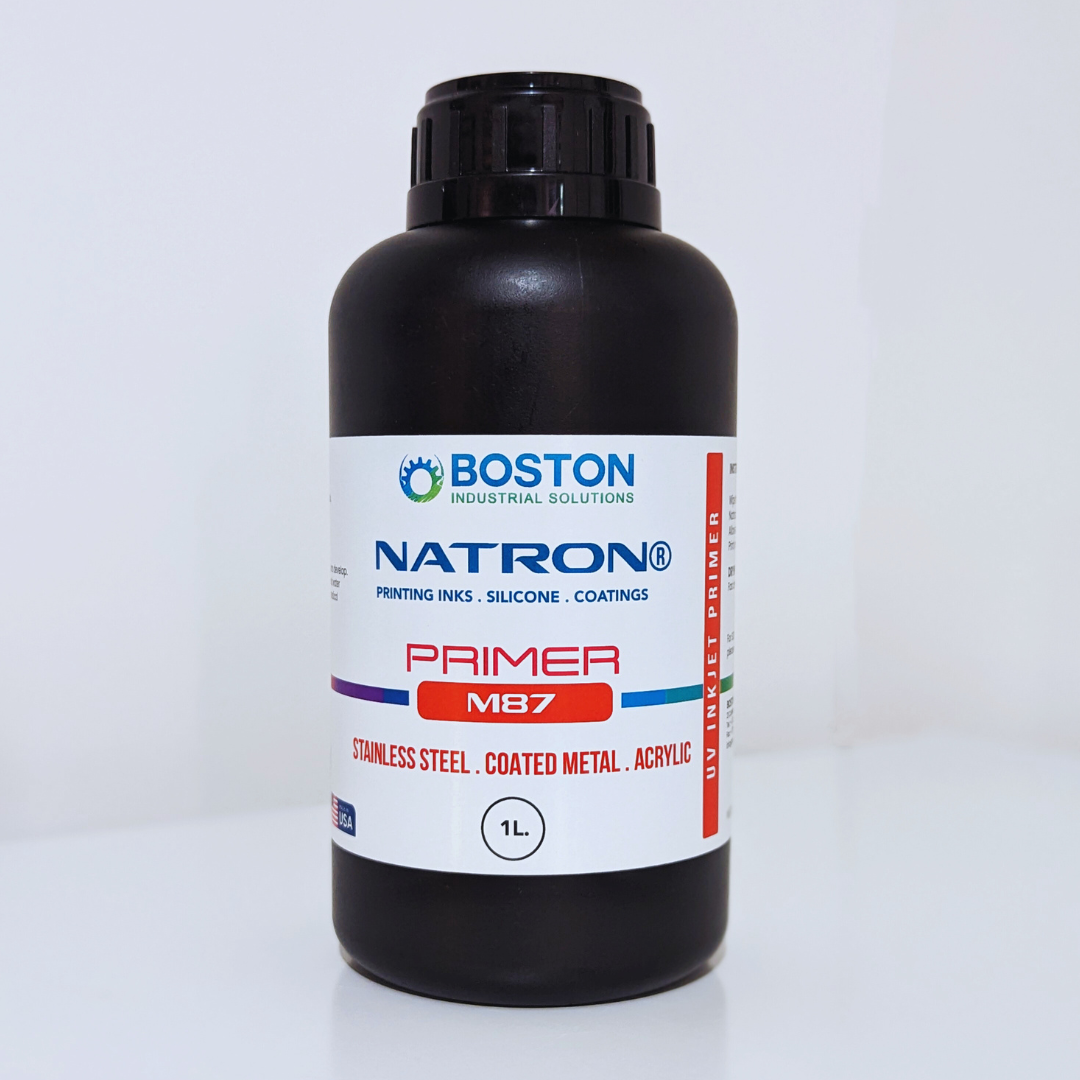
M87 ADHESION PROMOTER FOR METALS AND ACRYLIC
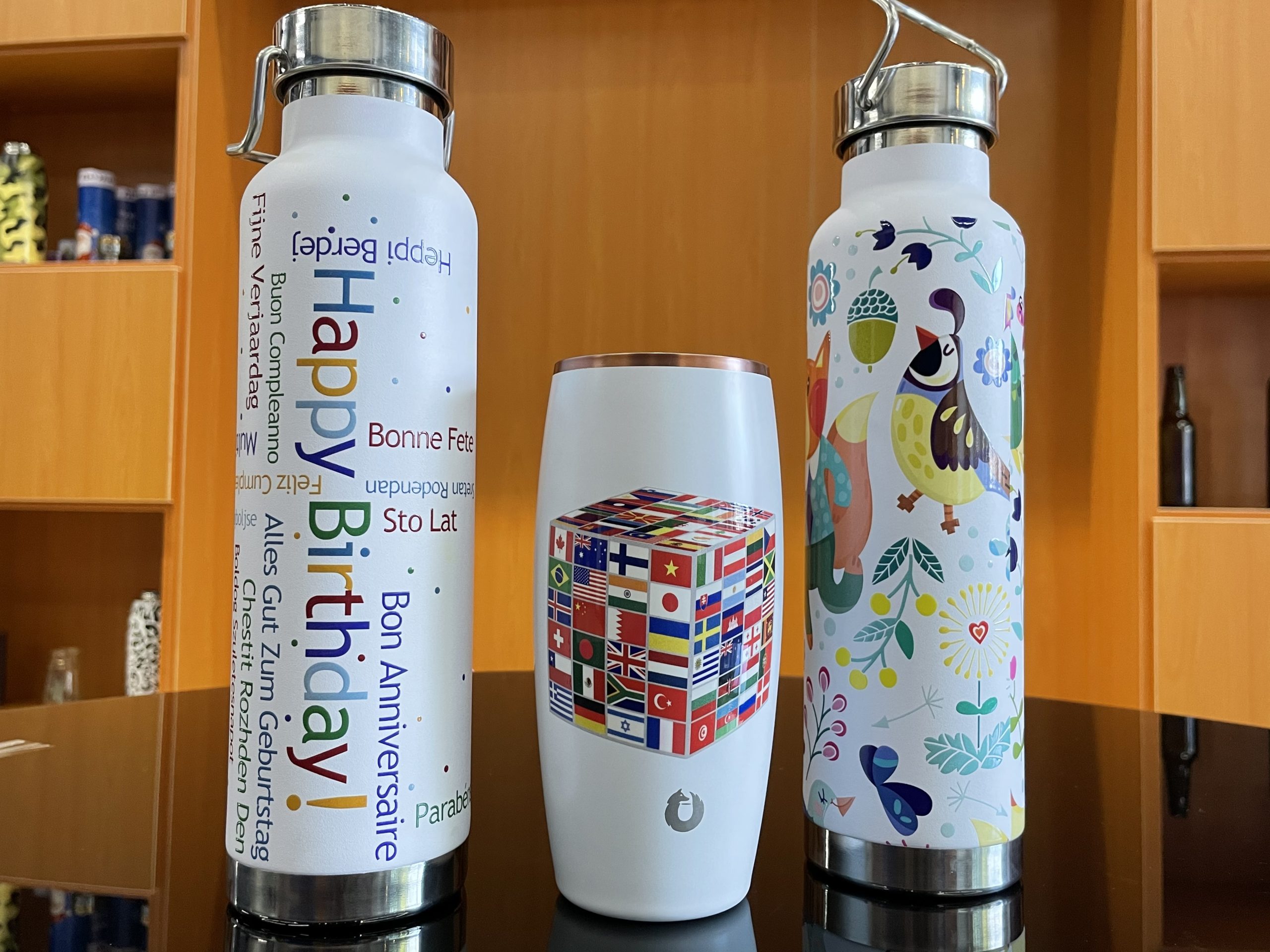
The Natron® M87 Adhesion Promoter is a primer for printing on metals (stainless steel, iron, copper, coated metals), acrylic and other hard-to-print substrates. The M87 adhesion promoter is also an excellent UV adhesion promoter for melamine coated products. Once cured, the M87 UV Adhesion primer for stainless steel drastically improves the bonding and durability of UV prints made on metal and acrylic.
This UV adhesion promoter helps UV inkjet ink adhere to stainless steel, coated metals, iron, copper, melamine (Formica) and acrylic. The M87 digital primer helps UV ink stick permanently to metal and coated aluminum substrates. A stainless steel surface molecular activator is scientifically formulated to actively transform the micro-structure of stainless steel surfaces to create permanent bonding. The Natron M87 Adhesion Promoter is the first choice for coated, painted surfaces, and bare metals. This promoter works well with all types of inks, including UV, UVLED, and solvent-based inks. Additionally, it works on a wide variety of other materials, such as acrylic and melamine. Learn more about metal priming solutions.
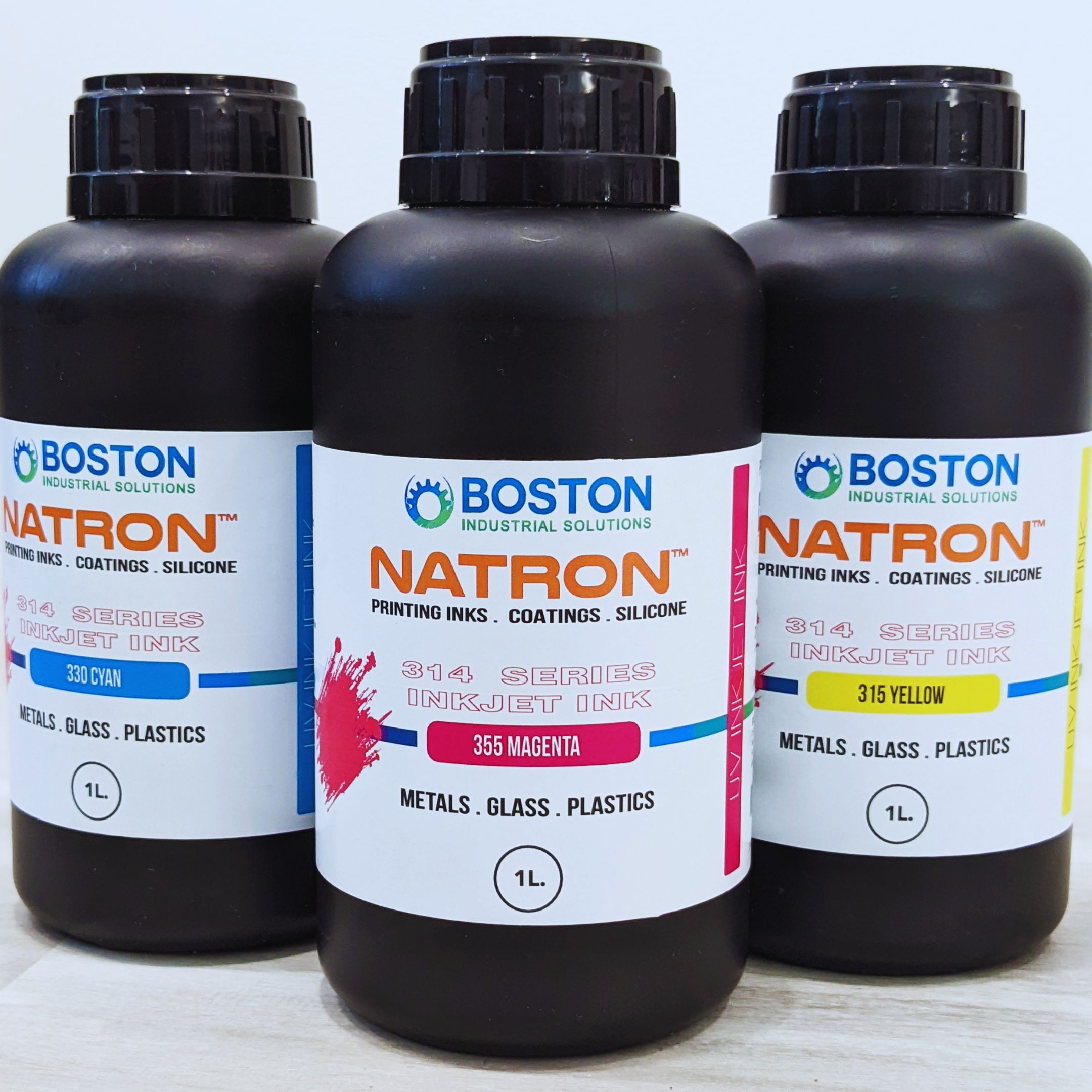
This UV inkjet primer works exceptionally well with all OEM inks including Inkcups S1 UV Inkjet Ink, Vivid White UV Curable Ink, and Mimaki UV Inks including LH-100 hard ink and many more UV inkjet inks.
What is the purpose of an adhesion promoter?
Adhesion promoters, also known as surface pre-treatments, are chemicals or substances that enhance the bonding properties between two surfaces. These bonding agents work by modifying the surface properties, thereby making it possible for inks, coatings, paints, or adhesives to bond to the material. In summary, adhesion promoters enable inks, coatings, adhesives, or paints to stick to a surface by increasing the strength and durability of the bond.
What is stainless steel?
Stainless steel is a group of iron-based alloys that contain a minimum of approximately 11% chromium. This composition prevents the iron from rusting and also provides heat-resistant properties.
Stainless steel’s resistance to rusting results from the presence of chromium in the alloy, which forms a passive film that protects the underlying material from corrosion attack, and can self-heal in the presence of oxygen. In addition, corrosion resistance can be increased further, by:
- increasing the chromium content to levels above 11%;
- addition of 8% or higher amounts of nickel; and
- addition of molybdenum.
The addition of nitrogen also improves resistance to pitting corrosion and increases mechanical strength. Thus, there are numerous grades of stainless steel with varying chromium and molybdenum contents to suit the environment the alloy must endure. Learn more about stainless steel manufacturing.
What makes metal impossible to print with UV ink?
Stainless steel is an extremely difficult material to print using UV inkjet inks, due to its very smooth surface. Any type of ink does not adhere on stainless steel and coated metals. Most durable UV inks have a problem with adhesion.
In addition, the manufacturing of stainless steel and coated metal involves adding chromium which creates self healing properties to metal in the presence of oxygen. This makes printing on stainless steel virtually impossible to print.
Preparing metal surfaces for inkjet printing
Stainless steel should never be painted unless it has first been abraded with a galvanized metal-etching primer. It prepares the surface of the metal, which allows digital UV inkjet ink to adhere onto the metal surface. No other type of primer will promote adequate adhesion. Never paint over an un-primed stainless-steel surface, or the finish will chip and peel soon after application. As a result, Boston Industrial Solutions, developed the M87 Stainless steel UV adhesion promoter.
Characteristics of metals
Characteristics of stainless steel are moderate corrosion resistance, are not susceptible to stress corrosion, magnetic, cannot be hardened by heat treatment. Other uses of stainless steel include annealed condition, and have a poor weld-ability for most grades. This latter characteristic also makes its difficult for UV inkjet inks to bond.