Frequently Asked Questions About Pad Printing Machines
What is a pad printing machine?
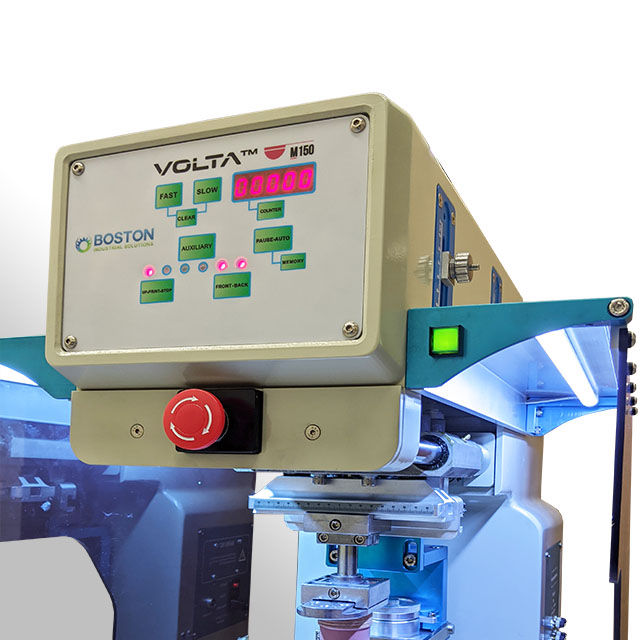
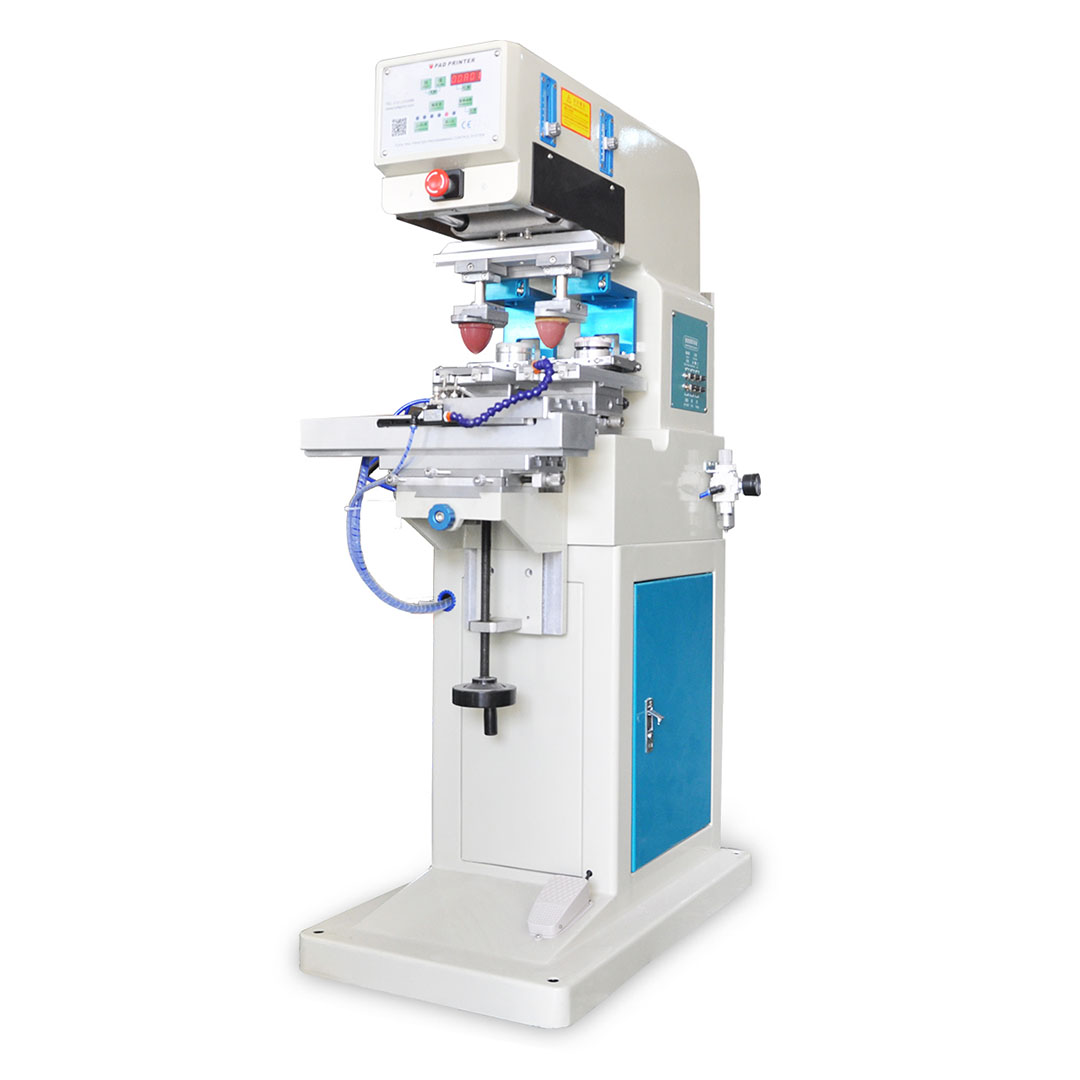
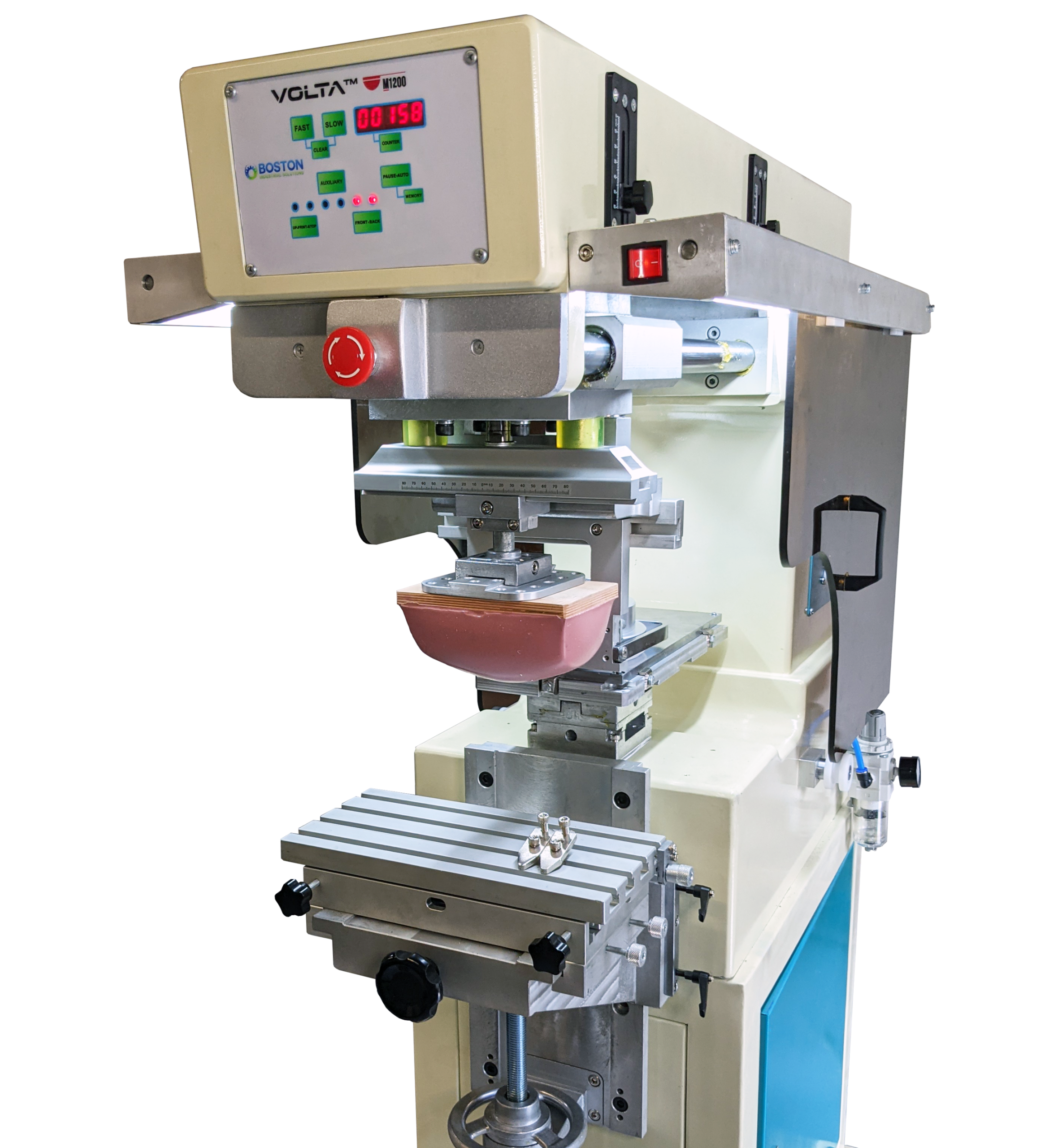
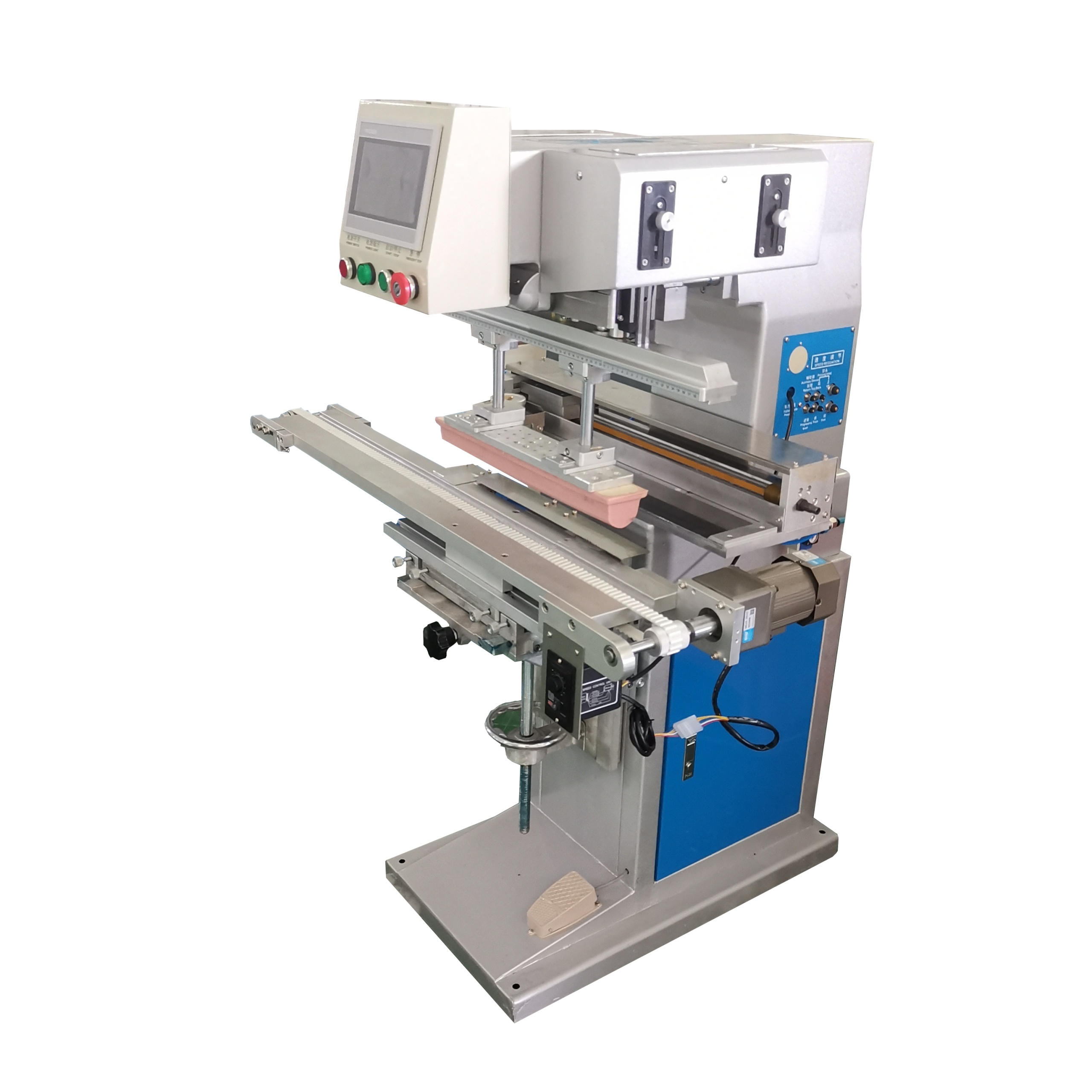
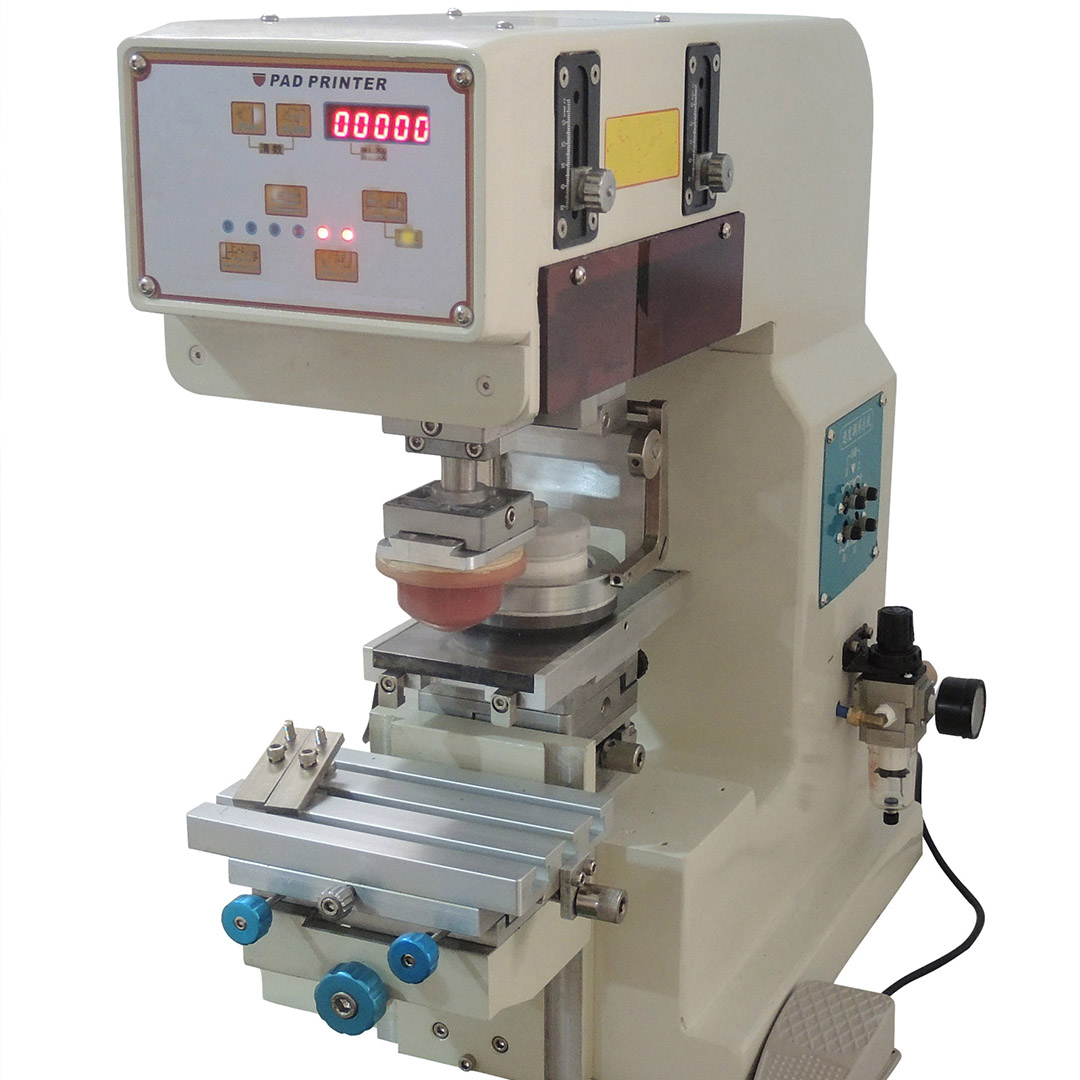
A pad printing machine also known as a pad printer is a specialized printing system used to transfer images, logos, text, symbols, and other graphics onto products with flat, curved, recessed, or irregular surfaces.
The machine uses a silicone pad to pick up ink from an engraved printing plate, or cliché, and transfer the image onto the surface of the product. This makes pad printing ideal for decorating and marking three-dimensional parts that may be difficult to print using other methods.
How does a pad printing machine work?
A pad printing equipment transfers an image in several steps:
- Ink fills the recessed image on an engraved printing plate.
- A doctor blade or sealed ink cup removes excess ink from the plate surface.
- A silicone pad presses against the ink-filled image and picks up the ink.
- The pad moves over the product and compresses against its surface.
- The ink is released from the silicone pad and transferred to the part.
The process then repeats for each print cycle.
What can a pad printing machine print on?
Pad printing machines can print on a wide range of materials and products, including:
- Plastics
- Metals
- Glass
- Ceramics
- Rubber
- Silicone
- Painted surfaces
- Coated components
The appropriate ink and surface preparation depend on the specific substrate and application.
What products can be printed with a pad printing machine?
Pad printing equipment are used to print graphics and markings on many types of products and components, including:
- Automotive components
- Medical devices
- Electronic components
- Consumer products
- Appliances
- Promotional products
- Sporting goods
- Toys
- Industrial parts
- Silicone and rubber components
The process is particularly useful for printing on products with complex shapes or limited flat surface area.
What are the advantages of pad printing machines?
Pad printer offer several advantages, including the ability to print on complex three-dimensional surfaces and a wide range of substrates.
Other benefits can include:
- Precise image transfer
- High-quality graphics
- Ability to print on curved and irregular surfaces
- Compatibility with many industrial inks
- Manual to fully automated machine configurations
- Fast production cycles
- Ability to print small details and fine graphics
- Flexible options for different production volumes
The right pad printer press configuration depends on the application and production requirements.
What types of pad printing machines are available?
Pad printing machines are available in different configurations to accommodate various production needs.
Common types include:
- Manual pad printing machinery
- Semi-automatic pad printing machines
- Automatic pad printer
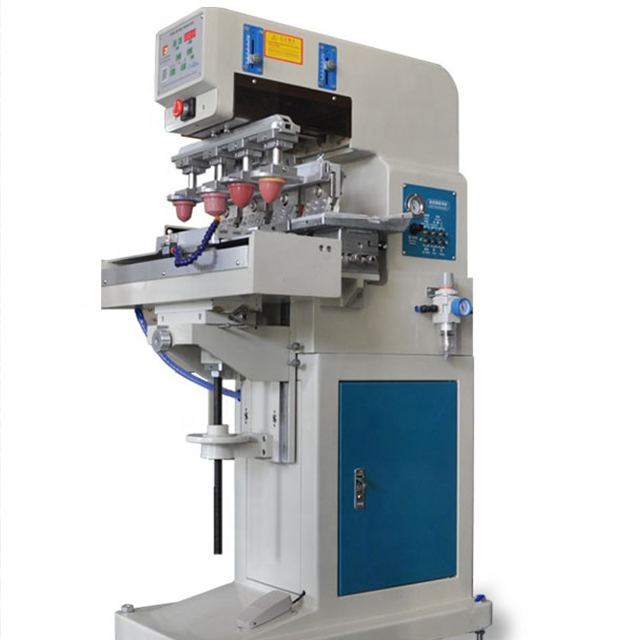
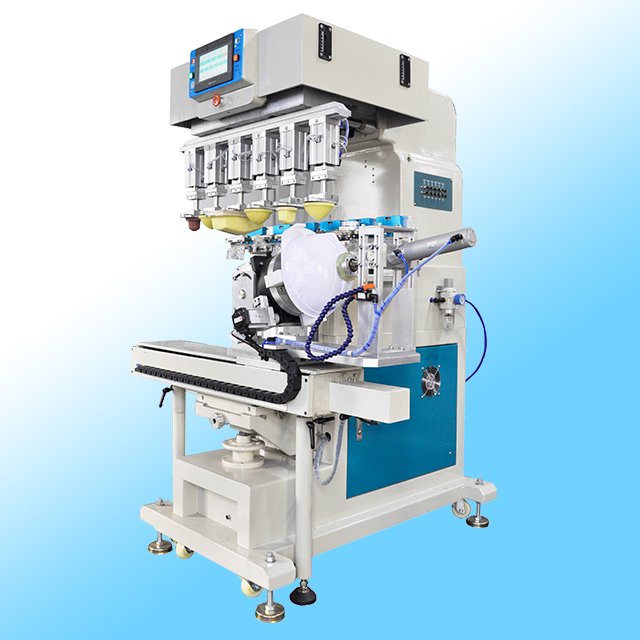
- Multi-color pad printing equipment
- Rotary pad printing machines
- Custom-engineered pad printing systems
The appropriate machine depends on factors such as production volume, number of colors, part geometry, automation requirements, and available space.
What is a manual pad printing machine?
A manual pad printing machine requires an operator to perform some or all of the loading, positioning, and printing operations.
Manual machines can be useful for prototyping, product development, short production runs, and applications where flexibility is more important than maximum production speed.
What is a semi-automatic pad printing machine?
A semi-automatic pad printer machine automates some aspects of the printing cycle while requiring an operator to load or unload parts or initiate certain operations.
Semi-automatic systems can provide a balance between operator control, production efficiency, and repeatability.
What is an automatic pad printing machine?
An automatic pad printing machine is designed to perform the printing process with minimal operator intervention. Automated systems can integrate part loading, positioning, printing, curing, and unloading into a production workflow.
Automatic pad printer is often used for high-volume manufacturing where consistent cycle times, repeatability, and production efficiency are important.
How do I choose the right pad printing machine?
Choosing the right pad printing equipment depends on your specific application and production requirements.
Important factors include:
- Part size and geometry
- Substrate material
- Image size
- Number of colors
- Number of print locations
- Required production volume
- Desired cycle time
- Manual or automated operation
- Available floor space
- Ink cup and printing plate requirements
Our pad printing specialists can help determine the machine configuration best suited to your application.
What is a sealed ink cup system on a pad printing machine?
A sealed ink cup system uses a closed ink cup with a doctor ring to supply ink to the engraved printing plate and remove excess ink from the plate surface.
As the cup moves across the cliché, the doctor ring wipes away excess ink, leaving ink only in the recessed image. The silicone pad then picks up the ink and transfers it to the product.
Sealed ink cup systems are widely used in industrial pad printing because they can provide consistent ink metering and help reduce ink exposure and evaporation.
What is an open ink well pad printing machine?
An open ink well system uses an exposed ink reservoir to supply ink to the engraved printing plate. A doctor blade removes excess ink from the plate before the silicone pad picks up the image.
Open ink well systems can be suitable for certain applications, particularly where flexibility or specific ink characteristics are required. The best configuration depends on the machine and application.
How many colors can a pad printing machine print?
Pad printer machines can be configured for single-color or multi-color printing. We offer up to 6-color printing machines.
The number of colors that can be printed depends on the machine design, the number of printing stations or cycles, the part geometry, and the required registration accuracy.
Multi-color pad printing may require multiple plates, pads, ink cups, or printing cycles to build the complete image.
Can pad printing machines print multiple images on one part?
Yes. Our pad printer machines can be configured to print multiple images or locations on a single part.
Depending on the application, this may require multiple printing stations, multiple pads, specialized tooling, or multiple print cycles.
The machine configuration should be selected based on the number and location of the images and the required production speed.
Can pad printing machines print on curved surfaces?
Yes. Pad printing is particularly well suited for curved surfaces.
The flexible silicone pad conforms to the product during the transfer process, allowing the machine to print images onto many curved or irregular surfaces.
The shape, hardness, and size of the silicone pad are important factors in achieving a high-quality print.
Can pad printing machines print on irregular or three-dimensional parts?
Yes. One of the primary advantages of pad printing is its ability to print on complex three-dimensional parts.
The silicone pad can deform around contours, curves, recesses, and other challenging geometries. Proper pad design and part fixture are important for achieving consistent image transfer.
What causes poor print quality on a pad printing machine?
Poor pad printing quality can result from many factors, including:
- Incorrect ink viscosity
- Incorrect solvent or thinner
- Improper plate depth
- Worn printing plate
- Incorrect silicone pad selection
- Damaged or worn doctor ring
- Improper ink cup pressure
- Incorrect printing speed
- Insufficient or excessive pad pressure
- Poor part fixture
- Surface contamination
- Inadequate ink curing
- Incorrect adhesion promoter
Successful pad printing requires the machine, ink, printing plate, silicone pad, and substrate to work together as a complete system.
Why is the printed image not transferring completely?
Incomplete image transfer can have several causes, including:
- Incorrect ink viscosity
- Incorrect pad shape or hardness
- Contaminated silicone pad
- Incorrect plate depth
- Insufficient pad pressure
- Poor substrate preparation
- Ink that is drying too quickly
- Incorrect solvent selection
- Surface contamination
Troubleshooting should evaluate the ink, plate, pad, machine settings, and substrate together.
How do I maintain my pad printing machine?
Regular maintenance helps maintain print quality and machine reliability.
Depending on the machine, maintenance may include:
- Cleaning ink cups and doctor rings
- Inspecting silicone pads
- Cleaning printing plates
- Checking machine alignment
- Inspecting pneumatic or mechanical components
- Lubricating components according to manufacturer recommendations
- Checking air pressure
- Inspecting fixtures and tooling
- Removing dried ink and contamination
Always follow the recommended maintenance schedule and procedures in the manual.
How often should a pad printing machine be serviced?
Service intervals depend on the machine design, production volume, operating environment, and manufacturer recommendations.
High-volume production equipment may require more frequent inspection and preventative maintenance than machines used occasionally.
Regularly inspecting wear components and addressing issues early can help reduce unexpected downtime.
Can pad printing machines be integrated with robots?
Yes. Our pad printing equipment can be integrated with robotic systems for automated loading, unloading, positioning, and handling of parts.
Robotic integration can be useful for high-volume production or applications requiring precise and repeatable part placement.