Frequently Asked Questions About Silicone Inks
What are silicone inks?
Silicone inks are specialized printing inks formulated to adhere to silicone rubber and other flexible, elastomeric, or difficult-to-print substrates. They are designed to provide durable, flexible printed graphics that can withstand the movement and deformation associated with silicone products.
Silicone inks are commonly used in pad printing and screen printing applications where conventional inks may not provide adequate adhesion or flexibility.
What are silicone inks used for?
Silicone inks are used to print graphics, logos, text, markings, and decorative designs on silicone and other challenging substrates.
Common applications include:
- Silicone rubber components
- Medical and healthcare products
- Wearable products
- Sporting goods
- Automotive components
- Consumer products
- Electronics
- Industrial parts
- Flexible and elastomeric products
The appropriate ink system depends on the substrate, printing process, and required performance characteristics.
Can you print on silicone rubber?
Yes. Silicone rubber can only be printed on using specially formulated silicone inks.
Because silicone has unique surface properties and and a low surface energy, silicone ink is required. Proper surface preparation, ink selection, and curing are important for achieving durable adhesion.
Why is silicone difficult to print?
Silicone can be challenging to print because of its low surface energy and flexible nature. Conventional printing inks may not bond effectively to the surface or may crack, peel, or lose adhesion when the silicone product is flexed.
Silicone inks are formulated to address these challenges and provide better adhesion and flexibility on compatible silicone substrates.
Do silicone inks require a hardener?
Some two-component silicone ink systems require a hardener or curing agent to achieve their intended performance.
The hardener initiates or supports the curing process and can contribute to properties such as adhesion, chemical resistance, abrasion resistance, and durability.
Always use the hardener specified for the particular silicone ink system and follow the manufacturer’s recommended mixing ratio.
Do silicone inks require an adhesion promoter?
Not always. Some silicone inks are designed to adhere directly to compatible silicone substrates without an additional adhesion promoter.
In other applications, an adhesion promoter may be used to improve bonding or address a particularly challenging substrate. The need for an adhesion promoter depends on the specific silicone material, ink system, and performance requirements.
Can silicone inks be used on other substrates?
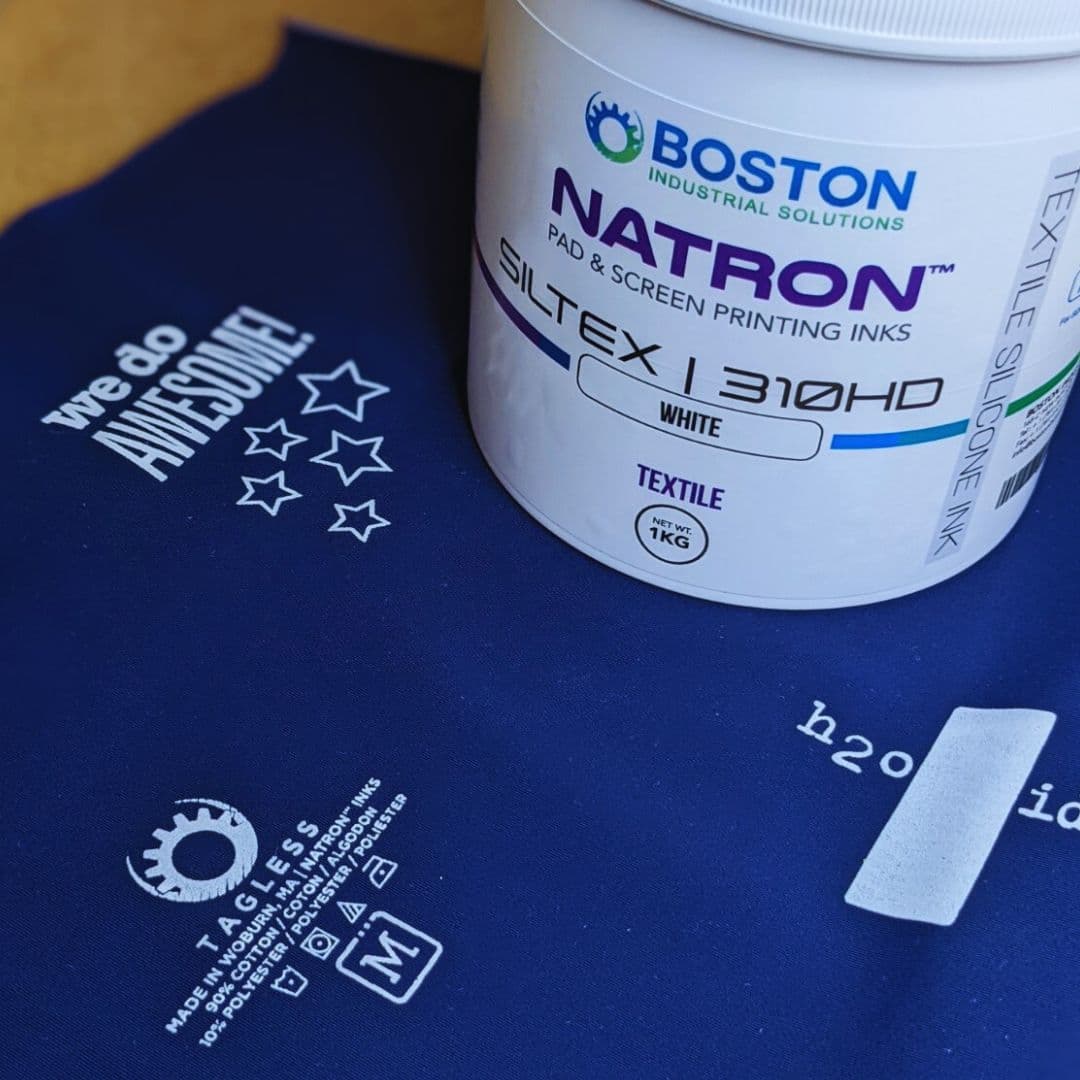
Some silicone ink systems may be compatible with substrates beyond silicone rubber, depending on the formulation, like for example textiles.