Frequently Asked Question about Pad Printing Pads
What is a pad printing pad?
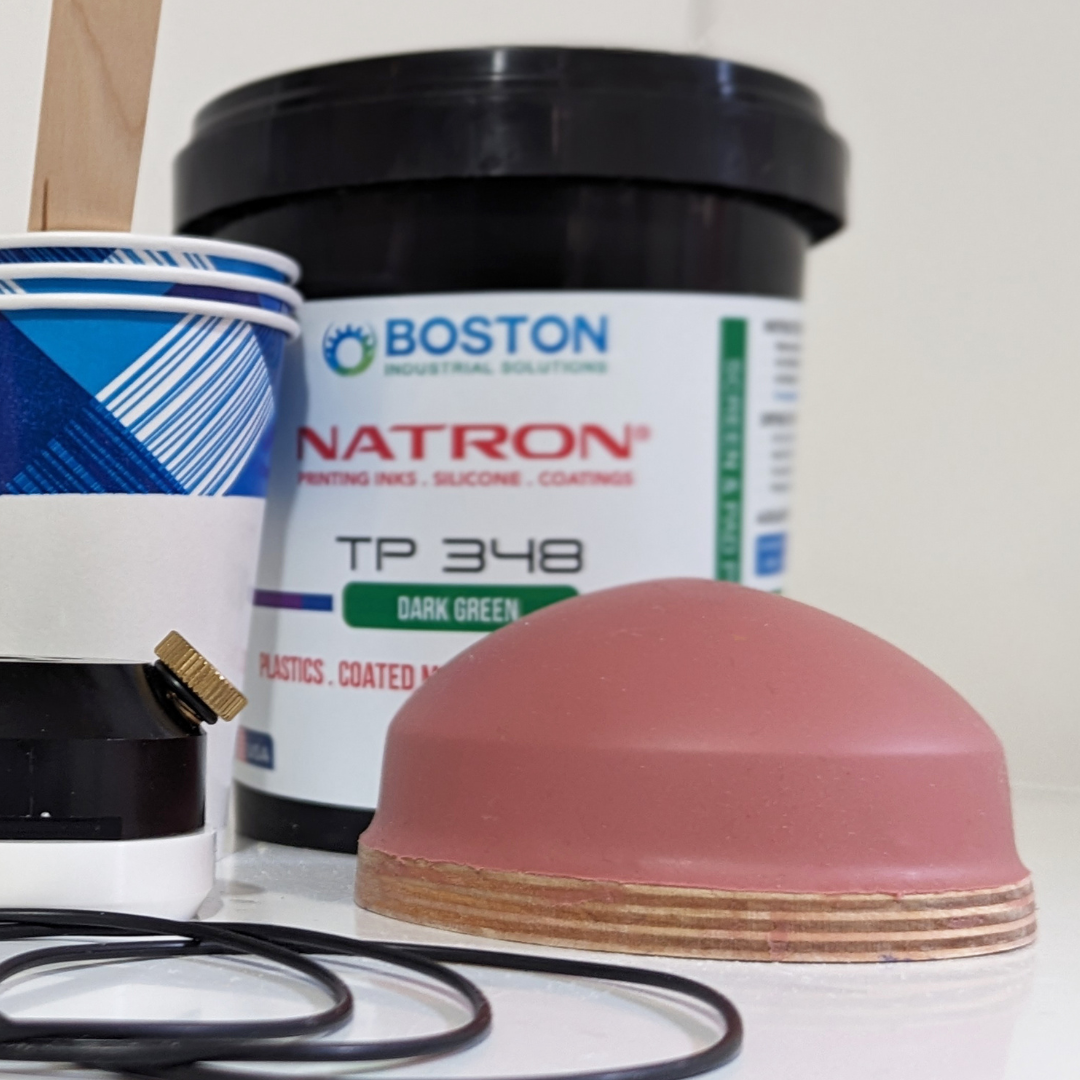
A pad printing pad is a flexible silicone component used to transfer an ink image from an engraved printing plate, or cliché, onto a product.
During the pad printing process, the silicone pad presses against the ink-filled image on the printing plate and picks up the ink. The pad then moves to the substrate and presses against the product, transferring the image onto its surface.
Because silicone pads are flexible, they can conform to curved, irregular, and three-dimensional surfaces that are difficult to print using conventional printing methods.
What are pad printing pads made of?
Most pad printing pads are made from silicone rubber. Silicone is used because it has the flexibility, release properties, and surface characteristics needed to pick up ink from a printing plate and transfer it cleanly to a substrate.
Pad printing pads are available in different silicone formulations and hardness levels to accommodate different printing applications.
What are silicone pad printing pads used for?
Silicone pad printing pads are used to transfer graphics, logos, text, markings, and other images onto products with flat, curved, recessed, or irregular surfaces.
Pad printing is commonly used to decorate or mark:
- Plastic components
- Metal parts
- Glass products
- Ceramic products
- Rubber components
- Silicone products
- Automotive parts
- Medical devices
- Electronics
- Consumer products
- Promotional products
- Sporting goods
The flexibility of the silicone pad allows pad printing to be used on surfaces that are difficult to print with other processes.
How does a pad printing pad work?
A pad printing pad transfers an image in three basic steps:
- Ink fills the recessed image on the engraved printing plate.
- The silicone pad presses against the plate and picks up the ink.
- The pad moves to the product and compresses against the substrate, releasing the ink and transferring the image.
The pad’s shape, hardness, size, and silicone formulation all influence how effectively the image transfers.
Why is silicone used for pad printing pads?
Silicone is widely used for pad printing because it provides the flexibility and ink-release characteristics (non-absorbent) needed for image transfer.
A silicone pad can deform around curved or irregular surfaces and then return toward its original shape. This allows the pad to make controlled contact with the substrate while minimizing distortion of the printed image.
What types of pad printing pads are available?
Pad printing pads are available in many different shapes, sizes, hardnesses, and silicone formulations.
Common pad shapes include:
- Round pads
- Cylindrical pads
- Bar pads
- Square pads
- Rectangular pads
- Conical pads
- Specialized custom shapes
The correct pad depends on the product geometry, image size, print location, substrate, and printing machine.
How do I choose the right pad printing pad?
Selecting the right pad requires considering several factors, including:
- Product shape
- Surface geometry
- Image size
- Image location
- Substrate material
- Printing machine
- Pad printing speed
- Ink system
- Required print quality
- Pad hardness
As a general rule, the pad should be large enough to cover the image while being shaped appropriately for the product surface. The correct pad geometry should also help prevent air from becoming trapped between the pad and substrate during image transfer.
What is pad printing pad hardness?
Pad hardness describes how firm or flexible a silicone printing pad is. It is commonly measured using a Shore hardness scale.
Softer pads can conform more easily to irregular or delicate surfaces, while harder pads can provide greater support and may be useful for certain flat or detailed printing applications.
The ideal hardness depends on the substrate, product geometry, image, ink system, and printing conditions.
How do I choose the right silicone pad hardness?
The right silicone pad hardness, or durometer, depends primarily on the shape of the product and the printing requirements.
A softer pad may be appropriate when printing on:
- Irregular surfaces
- Curved surfaces
- Delicate components
- Products requiring greater pad conformity
A harder pad may be appropriate for:
- Flat surfaces
- Detailed images
- Applications requiring greater pad stability
These are general guidelines. The best hardness should be determined through testing based on the specific application.