Frequently Asked Questions About Printing Solvents
What are printing solvents used for?
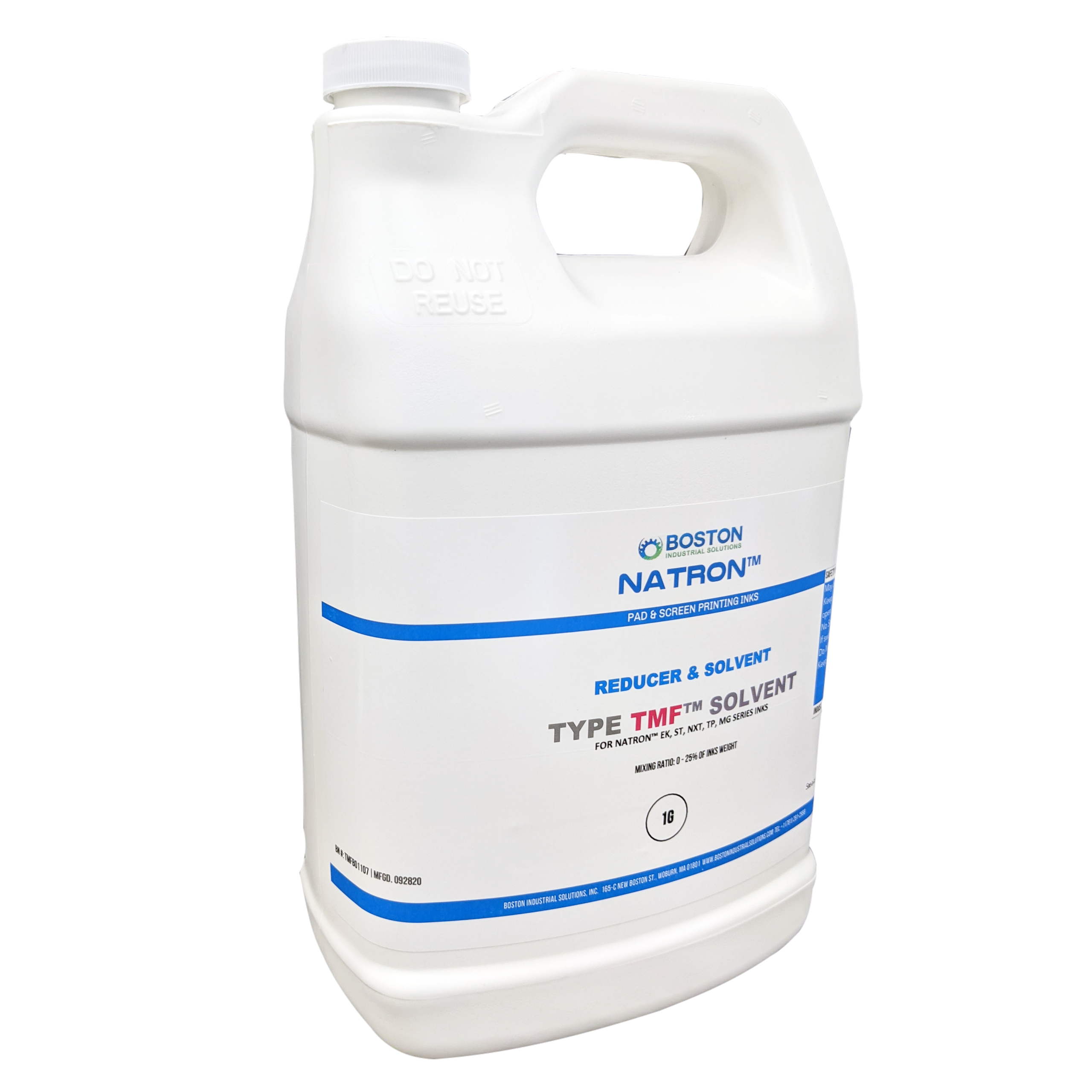
Printing solvents, also called ink thinners, are used to adjust ink viscosity, control evaporation, improve printability, and support consistent image transfer. In pad printing, the right solvent helps the ink reach the proper consistency for pickup from the etched plate and transfer by the silicone pad to the substrate.
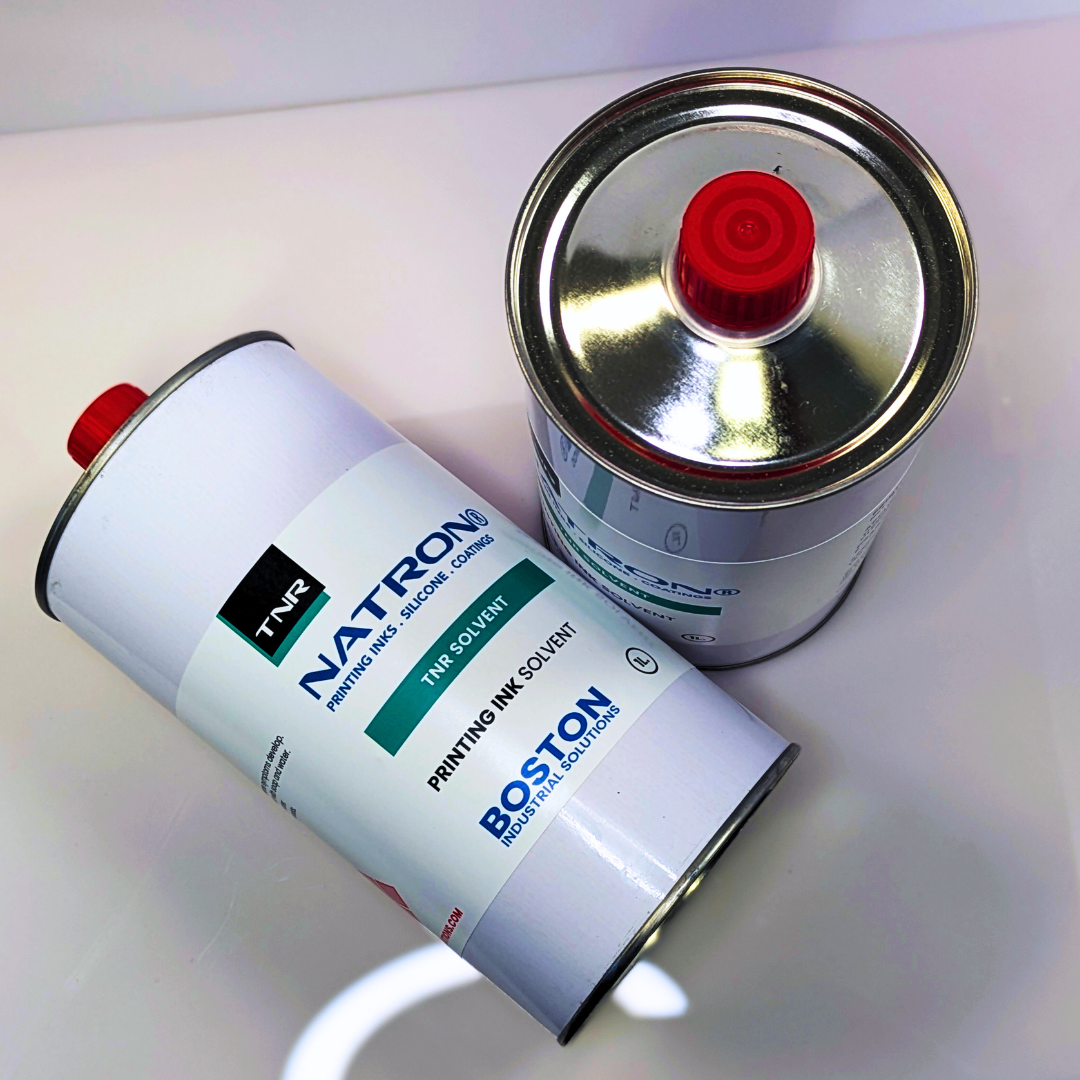
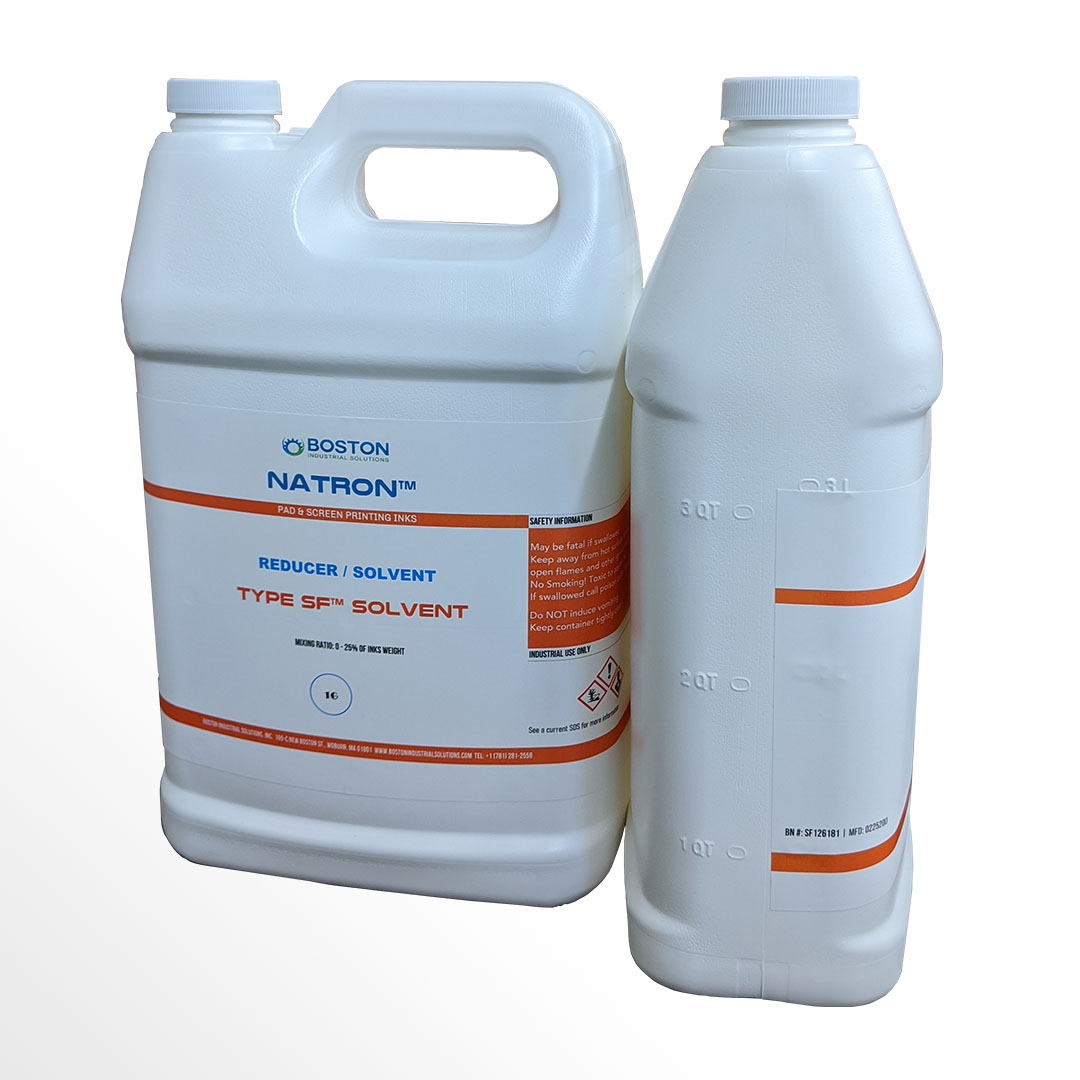
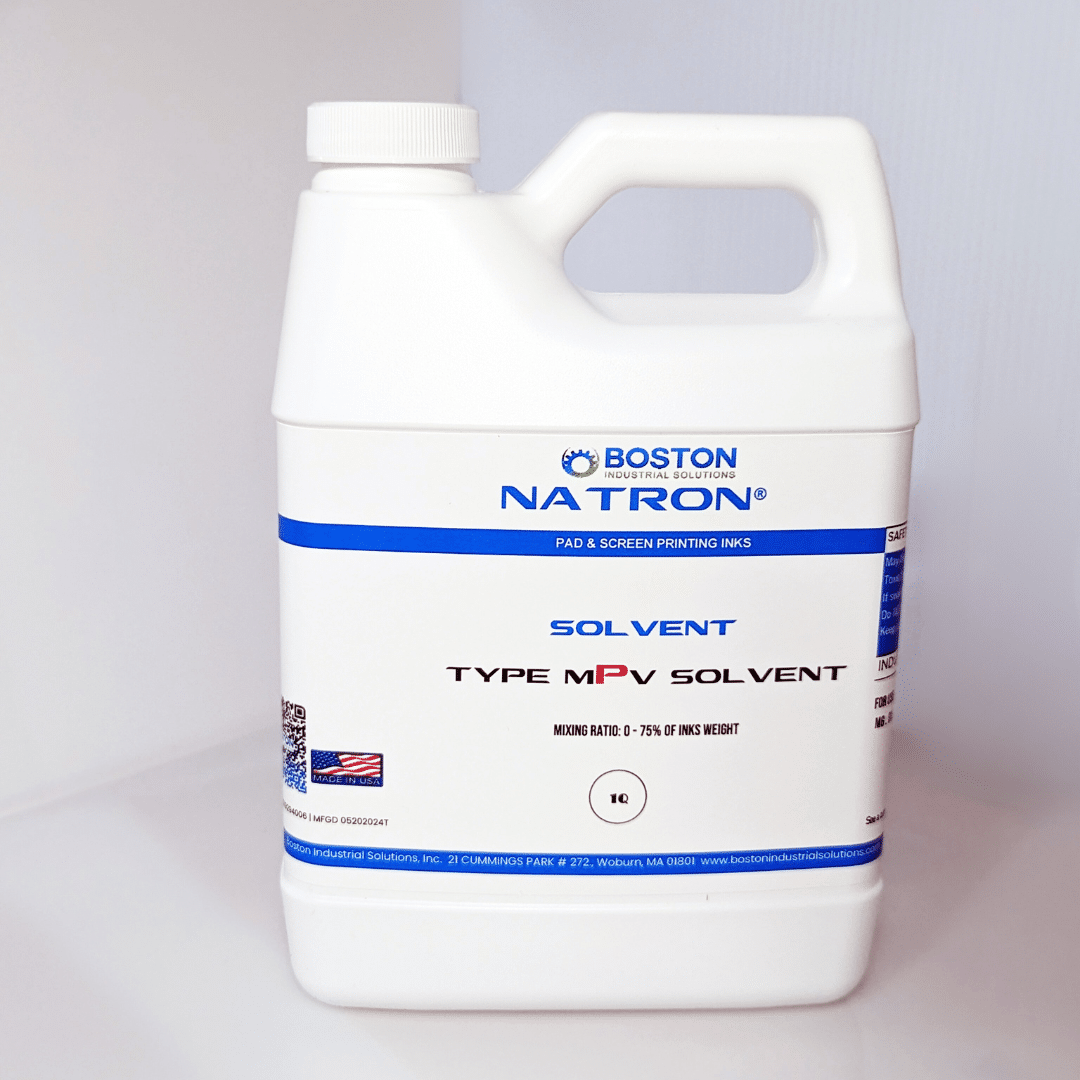
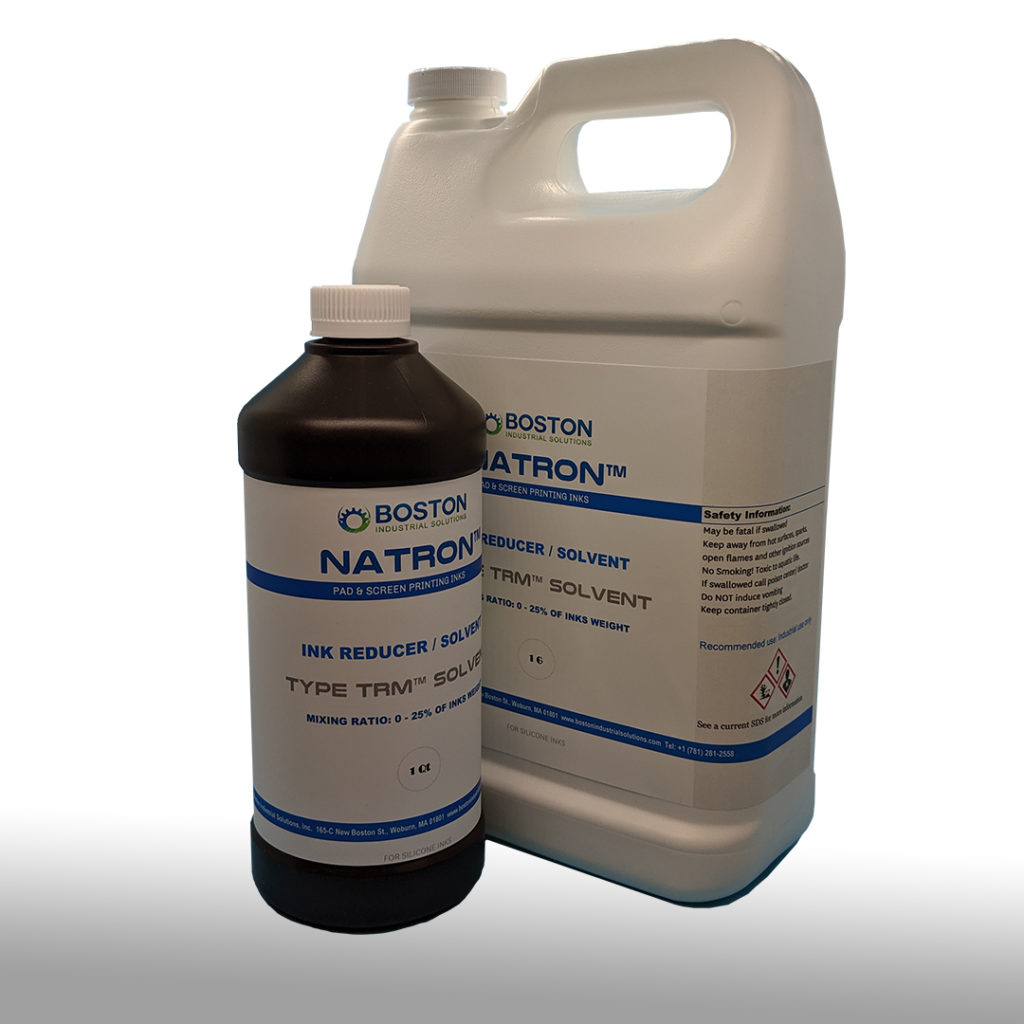
Boston Industrial Solutions offers specially formulated solvents for pad printing inks, silicone inks, and other printing applications.
What is the difference between a solvent and an ink thinner?
In printing applications, the terms solvent, ink thinner, and printing thinner are often used interchangeably. These products are added to inks to modify characteristics such as viscosity and evaporation rate.
The correct thinner depends on the specific ink system, printing process, substrate, and desired production conditions. Always verify compatibility and recommended usage with the applicable technical documentation.
Why are solvents important in pad printing?
Pad printing solvents play an important role in controlling ink viscosity and evaporation. These factors affect how well an ink transfers from the etched printing plate to the silicone pad and then onto the part.
Choosing the appropriate solvent can help optimize print quality, image transfer, drying behavior, and production consistency. Boston Industrial Solutions offers pad printing solvents with different evaporation speeds to help manufacturers fine-tune their printing processes.
How do I choose the right pad printing solvent?
The right pad printing solvent depends on several factors, including:
- The type and series of ink being used
- The substrate or material being printed
- The pad printing machine and process
- Desired evaporation speed
- Ambient temperature and humidity
- Required drying time
- Whether you are printing wet-on-wet or using multiple layers
Boston Industrial Solutions offers fast, medium, medium-slow, slow, and retarder solvent options for different printing requirements. Always consult the product’s technical information or contact the technical support team for help selecting the right solvent.
What are fast-, medium-, and slow-evaporating solvents?
Evaporation speed describes how quickly a solvent leaves the ink after application. Fast-evaporating solvents can support quicker drying, while slower solvents and retarders provide more time for the ink to remain workable during the printing process.
The ideal evaporation rate depends on your equipment, ink, production environment, and printing requirements. Boston Industrial Solutions provides solvents across multiple evaporation speeds to help manufacturers fine-tune ink performance.
How much solvent should I add to printing ink?
The recommended solvent percentage varies by ink formulation and application. Factors such as ink viscosity, printing method, image size, substrate, evaporation rate, and environmental conditions can affect the amount required.
Do not assume the same mixing ratio applies to every ink. Follow the manufacturer’s technical data sheet and recommended formulation guidelines for your specific ink and solvent combination.