
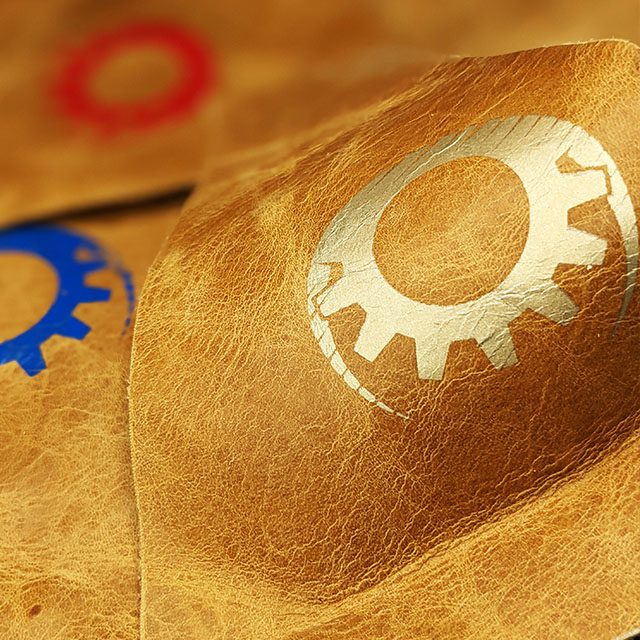
Printing on leather requires the right printing method paired with the right ink whether you’re printing on a handbag, customizing footwear, or adding a logo to a wallet. In this post, we’ll walk through the three most common methods for printing on leather – pad printing, screen printing, and inkjet printing – and explain how Boston Industrial Solutions supports each one with purpose-built inks and, for pad printing specifically, complete turnkey machines.
Why Leather Is a Unique Substrate
Unlike plastic or metal, leather is a natural (or synthetic) material with texture, some flexibility, and porosity that varies from hide to hide. A good ink for printing on leather needs to:
- Bond well to a surface that isn’t perfectly uniform
- Flex without cracking or peeling as the leather bends
- Resist abrasion, since leather goods are handled constantly
- Dry to a finish that complements the material, whether that’s matte, satin, or high gloss
That’s why choosing the right method for printing on leather – and the right ink formulation for the job – matters so much.
Method 1: Pad Printing on Leather
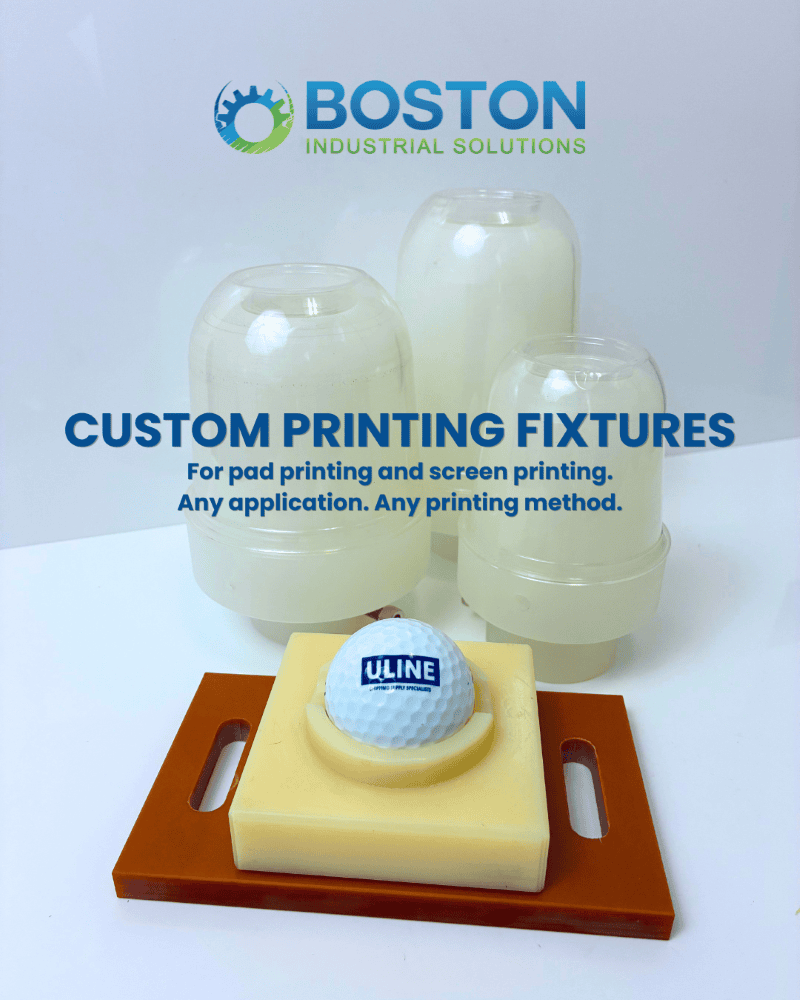
Pad printing (also called tampo printing) uses a soft silicone pad to transfer an image from an etched plate onto the surface of an object. Because the pad itself is flexible, it can conform to slightly curved or irregular surfaces, which makes it a great fit for items like footwear, belts, wallets, and promotional leather goods.
Pad printing is especially popular for:
- Fashion accessories and footwear manufacturing
- Small logos, patterns, or brand marks on leather promotional products
- Precision detail work where a crisp, consistent image is needed run after run
The tradeoff is that pad printing is generally best suited to smaller graphics rather than large-format designs, but for logos, icons, and fine detail, it’s hard to beat.
Method 2: Screen Printing on Leather
Screen printing pushes ink through a mesh stencil using a squeegee, depositing a layer of ink onto the leather surface. This method is well suited to larger designs, bold graphics, and higher-volume runs where a thicker, more opaque ink deposit is desirable.
Screen printing works well across a range of substrates beyond leather – including paper, wood, plastics, metal, and glass – but on leather in particular, it produces vibrant, durable prints that hold up to handling and flexing. Solvent-based screen printing inks are a common choice here because they evaporate during and after printing, leaving a durable, well-adhered ink film behind – a real advantage in high-speed production environments.
Method 3: Inkjet Printing on Leather
Inkjet printing offers something the other two methods can’t: the ability to print full-color, photorealistic designs and fine gradients directly onto leather without the need for plates or screens. UV-curable inkjet inks are particularly useful here, since they cure instantly under UV light rather than air-drying, which speeds up production and improves durability on flexible substrates like leather.
Inkjet is the go-to choice when a project calls for:
- Multi-color or photographic designs
- Short runs or customized, one-off pieces
- Fast turnaround without the setup time of screens or pad printing plates
How Boston Industrial Solutions Supports Printing on Leather With the Right Inks
Getting a great result on leather isn’t just about the printing method – it’s about using an ink that’s actually formulated to perform on that material. Our inks support all three of these printing methods on leather and synthetic leather substrates:
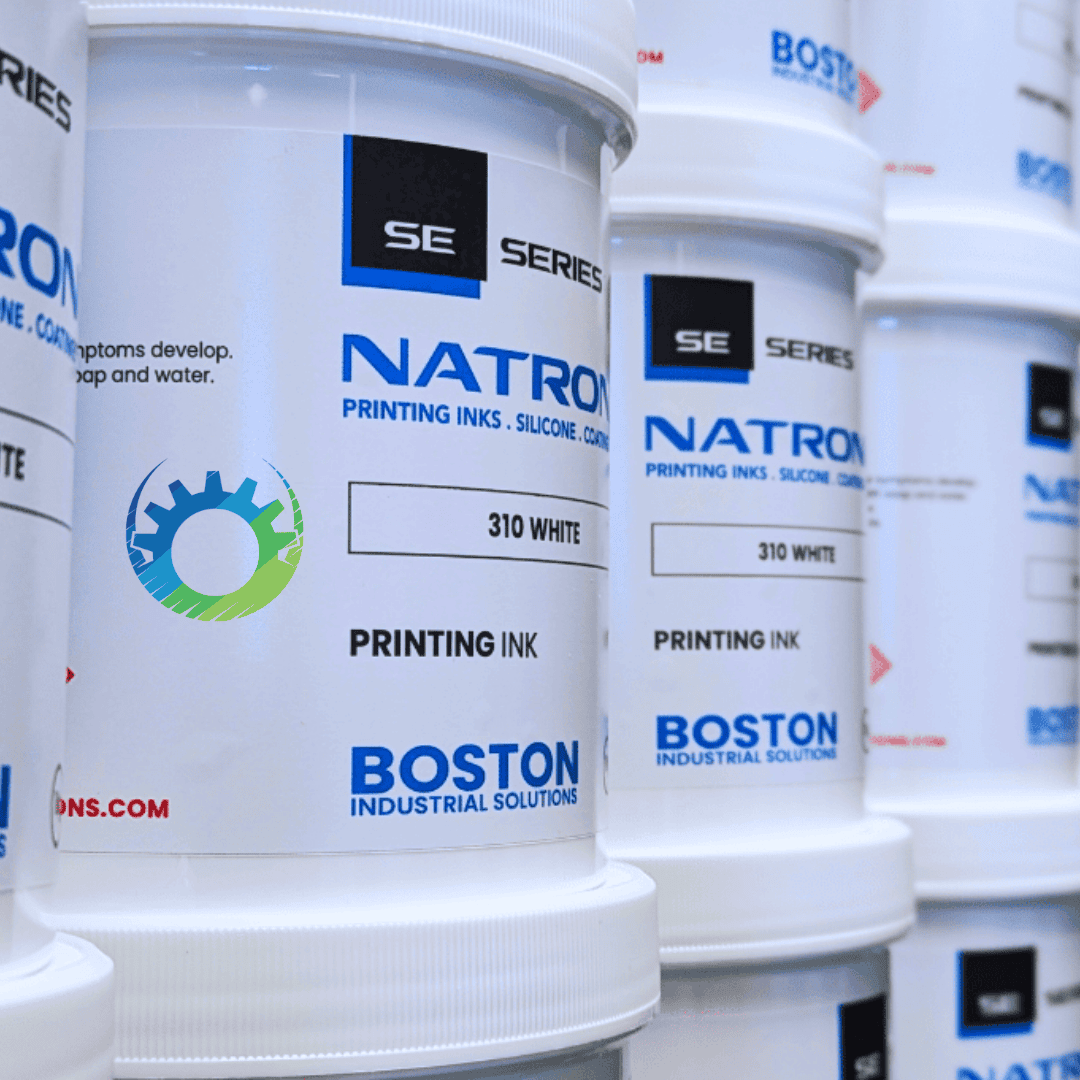
Natron® TP Series ink is a one- or two-component pad printing ink built to work across a wide range of substrates, including leather, plastics, wood, and paper. It’s formulated for quick drying, high opacity, and high gloss, while remaining flexible enough to move with the leather instead of cracking. Since leather is a natural material, having an ink that adheres reliably and resists abrasion is essential – and the TP Series ink is designed with exactly that kind of durability in mind.
Boston Industrial Solutions offers solvent-based, UV/LED-curable, and silicone screen printing inks, several of which are suited to leather and synthetic leather applications. These inks are formulated to adhere well to leather’s textured surface while producing the vibrant, long-lasting prints that leather goods manufacturers need.
For manufacturers looking to print full-color or detailed designs on leather without screens or pads, Boston Industrial Solutions also supplies UV inkjet inks suited to leather and synthetic leather printing, rounding out a full set of ink options no matter which printing process fits your production line.
How Boston Industrial Solutions’ Machines Support Pad Printing on Leather
Beyond ink, Boston Industrial Solutions also provides the equipment needed for pad printing on leather from start to finish. Our pad printing machines for leather applications are available as turnkey systems, meaning they arrive ready to run rather than requiring extensive setup or sourcing components from multiple vendors.
Pairing the Natron TP Series ink with one of these pad printing machines gives leather goods manufacturers – from footwear brands to promotional product companies – a complete, tested solution rather than a patchwork of ink and equipment from different suppliers.
Whichever method fits your production needs, Boston Industrial Solutions offers the ink formulations and pad printing machines to help you get a durable, professional result on leather every time.
Have questions about which ink or pad printing machine is right for your leather application? Reach out to the Boston Industrial Solutions team to talk through your specific project.